Tough Princess Anne’s Brutal Reaction To Man Who Tried to Kidnap Her For $3Million Ransom
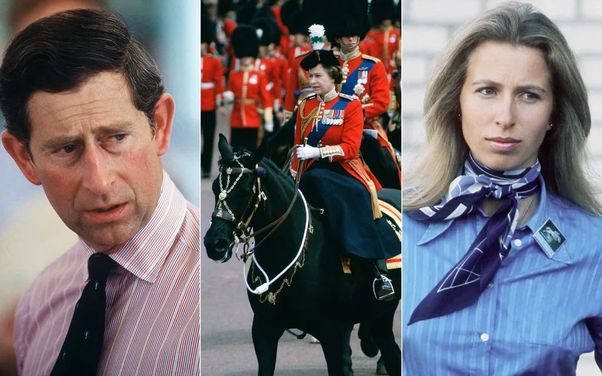
Princess Anne is known for her unwavering spirit, and a dramatic incident nearly fifty years ago perfectly encapsulates her toughness.
As she marks her 75th birthday, a previously untold Chapter of her life reveals how she confronted a would-be kidnapper with guts and resolve.
During a harrowing incident in 1974, she delivered a memorable response that has since become synonymous with her fierce demeanor.
The chilling event unfolded on March 20, 1974.
At that time, Princess Anne was just 24 and traveling back to Buckingham Palace with her then-husband, Captain Mark Phillips, alongside their bodyguard, Jim Beaton.
As they cruised down The Mall in London, a man named Ian Ball suddenly blocked their way.
Armed with a shotgun, he escalated the situation by opening fire.
As the attacker demanded that the Princess exit her vehicle, Anne’s instinctive reply was a defiant “Not bloody likely!”
This determined statement not only showcased her bravery but also turned the tide in what could have been a disastrous outcome.
Despite the chaos, Anne managed to maintain her composure.
Eyewitnesses noted that she quickly assessed the threat, opting not to obey the gunman’s commands.
This fearless attitude can be attributed to her background in sports and her disciplined training, which might have equipped her with the fortitude to confront danger head-on.
Coincidentally, local boxer Ronnie Russell happened to be nearby.
Without hesitation, he rushed in and confronted Ball, landing a blow that provided crucial seconds for security personnel to react.
Sadly, during the encounter, Beaton was shot three times but exhibited extraordinary bravery, later being awarded the George Cross for his heroism.
Reflecting on the incident later, Beaton recalled the lack of preparation they had.
“There was no backup vehicle; the training was minimal back then,” he stated, adding that their mindset at the time was that such events were highly unlikely.
Thankfully, all individuals harmed that day, including Beaton himself and others who intervened, survived the ordeal.
In a display of genuine gratitude, Princess Anne took the time to visit Beaton in the hospital, expressing her appreciation for his courageous efforts amid the shocking events.
She managed to convey compassion even in the midst of chaos, revealing a softer side of her character.
Ian Ball, the assailant, didn’t escape unscathed either.
He was apprehended at the scene and later pled guilty to charges of attempted murder and kidnapping.
Due to his mental health condition, diagnosed as schizophrenia, he was committed to Broadmoor Hospital for treatment.
The kidnapping attempt has remained a significant and defining moment in Princess Anne‘s life.
Reflecting on it in a 2017 ITV documentary, she commented on the selective nature of memory, recalling that while she felt she remembered the events, she wouldn’t insist on the exact order they happened.
This experience not only solidified Anne’s reputation as one of the toughest royals but also changed the Royal Family’s approach to security dramatically.
Sources emphasize that her background in equestrian sports greatly influenced her response during the crisis.
She had learned to anticipate challenges and remain calm under pressure, skills that were undeniably crucial that day.
Now at the age of 75, Princess Anne continues to embody resilience and grit.
Her experience in the face of danger serves as a powerful reminder of her strength, and her story proves to be one of the most striking and inspiring episodes within the legacy of the British monarchy.
The incident paved the way for enhanced security measures, ensuring that future generations can feel a bit safer, thanks in part to Anne’s unwavering bravery that fateful day.
Princess Anne Reveals Queen Elizabeth’s Final Concerns Before Her Death
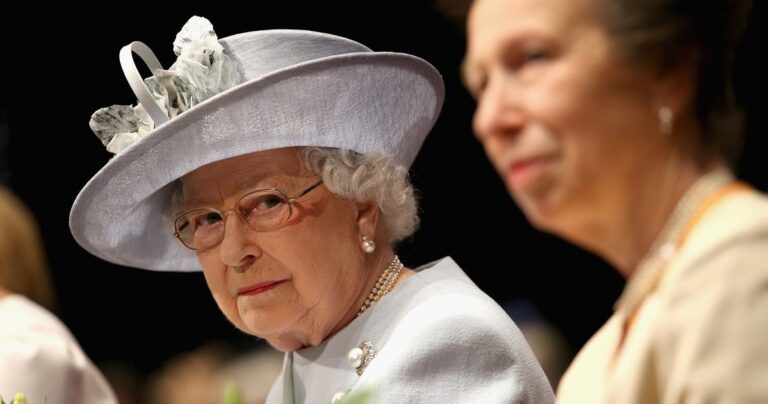
In a heartfelt revelation, Princess Anne has opened up about her mother, Queen Elizabeth II’s, worries leading up to her passing.
In a recent BBC documentary, the Princess Royal shared insights into the late monarch’s thoughts on the practicalities of her funeral, particularly if she were to die in Scotland.
It turns out that Queen Elizabeth was genuinely concerned about the complications that could arise from such a scenario.
According to Anne, the Queen was apprehensive that her death at Balmoral, the royal family’s Scottish estate, would create logistical challenges for those tasked with organizing her funeral.
The Princess, now 72, reflected on how her mother remained committed to her duties until the very end, showcasing a sense of responsibility that defined her reign.
Anne recounted a poignant moment before her mother’s death in September of last year, describing it as serendipity.
She believed there was a point when the Queen felt that passing away at Balmoral would complicate matters for the authorities in charge of her funeral arrangements.
“We made an effort to convince her that wasn’t a decision she needed to make,” Anne explained, expressing hope that her mother ultimately felt reassured about the situation.
The planning surrounding Queen Elizabeth‘s death was extensive and had a codename: Operation London Bridge.
This operation outlined the procedures for her state funeral, including the lying in state and various public vigils.
Interestingly, courtiers had also prepared for the possibility of her passing away in different locations, whether abroad or at one of her other residences.
It’s no surprise that even in her final days, the Queen was thinking of others.
This selflessness echoed the promise she made on her 21st birthday in 1947, dedicating her life to service.
The documentary features Hugh Edwards announcing the Queen’s death, providing a backdrop to the events that followed, including Charles’s ascension to the throne.
Anne described a significant moment during her mother’s funeral when the Imperial State Crown was removed from the Queen’s coffin.
This act symbolized the transfer of duty from Elizabeth to Charles.
“When he removed the crown during my mother’s funeral at St. George’s, I felt a strange sense of relief, like it was finally over,” she recalled, noting that it marked a new chapter for the monarchy.
Despite Charles’s lifelong preparation for kingship, Anne candidly stated that no one can truly brace themselves for such a monumental shift.
“I don’t think anyone can really prepare for that kind of change, not easily,” she remarked.
The transition is profound, and with it comes the realization that the responsibilities of the monarchy are ongoing.
Princess Anne emphasized the continuous nature of royal duties, stating that the role of monarch never truly ends, regardless of circumstances.
She noted that while the transition is significant, Charles seems to be enjoying his new position as King.
How Princess Anne survived a dramatic kidnap attempt
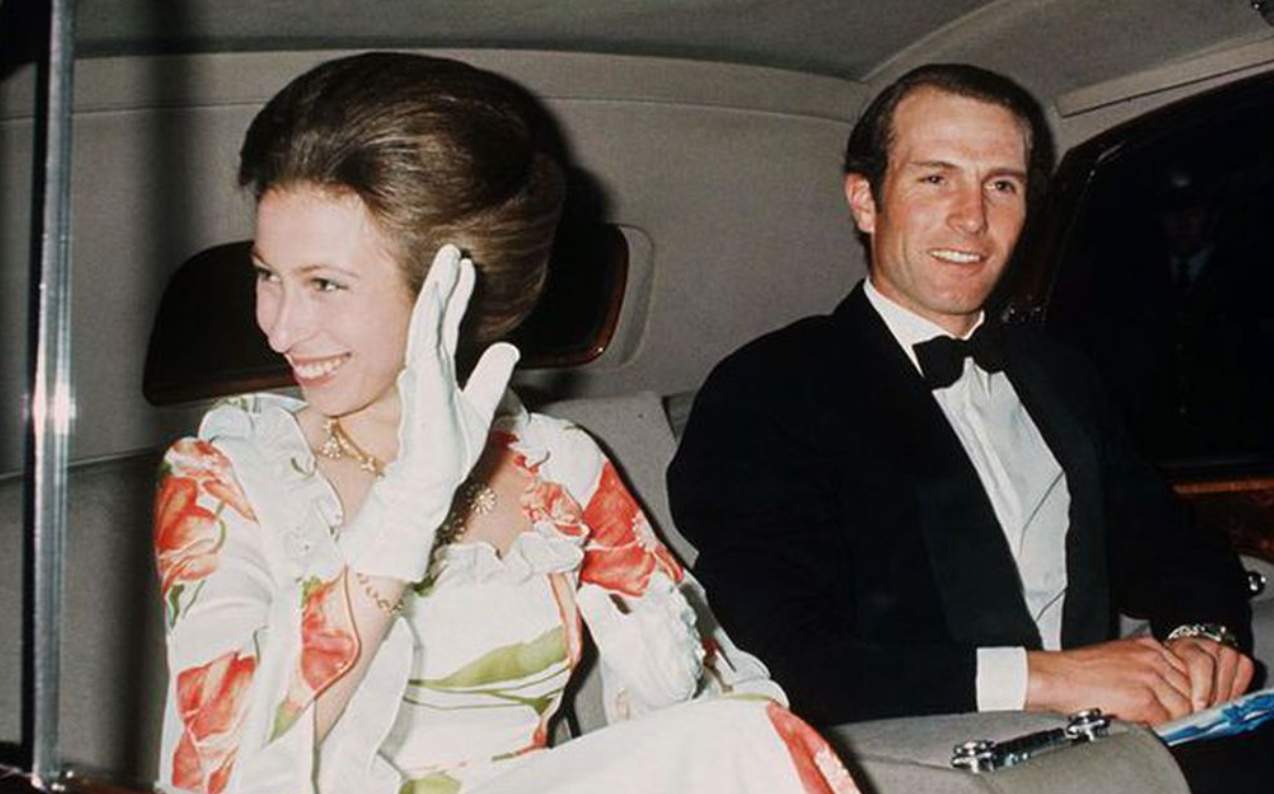
On the evening of March 20, 1974, an audacious attempt was made to kidnap Her Royal Highness Princess Anne, the only daughter of Queen Elizabeth II and Prince Philip.
The shocking incident, which left multiple people injured by gunfire, unfolded on The Mall outside Buckingham Palace and culminated in the would-be kidnapper being tackled to the ground.
The 23-year-old princess’s calm and collected response in the face of danger would cement her reputation as one of the most unflappable members of the royal family.
At the time, Anne was fourth in line to the throne and had been carrying out royal duties since the age of 18. Just months earlier, in November 1973, she had married Captain Mark Phillips in a televised ceremony at Westminster Abbey watched by an estimated 500 million people worldwide.
The attempted armed kidnapping was an unprecedented breach of royal security in modern times.
2. The Kidnapping Plot
The man behind the kidnap plot was Ian Ball, a 26-year-old unemployed laborer from North London.
Described as a loner by those who knew him, Ball had become fixated on Princess Anne and spent two years meticulously planning her abduction.
Inspired by Frederick Forsyth’s novel “Day of the Jackal,” he aimed to emulate the book’s antagonist, an assassin known only as “The Jackal.”
As part of his elaborate scheme, Ball moved from his basement flat in Bayswater to a rented house in Fleet, Hampshire, just five miles from where Anne and Captain Phillips lived at Sandhurst.
He assumed a false identity, going by the name John Williams, and rented a Ford Escort car.
Inside the vehicle, he stockpiled Valium tranquilizers and two pairs of handcuffs.
Ball had obtained details of Anne’s weekly schedule by simply phoning the Buckingham Palace press office, which revealed her upcoming engagements.
On March 20, he put his plan into action, typing out a ransom note on a rented typewriter.
The letter, addressed to Queen Elizabeth II, read: “Your daughter has been kidnapped.
The following are conditions to be fulfilled for release.”
Ball demanded a ransom of £3 million (equivalent to nearly £26 million today) to be paid in £5 notes, as well as a plane to Switzerland and a promise of freedom from prosecution.
3. The Incident Unfolds
At around 8 p.m. on March 20, Princess Anne and Captain Phillips were returning to Buckingham Palace by limousine after attending a charity film screening.
Accompanying the couple were Anne’s personal bodyguard, Inspector James Beaton, her lady-in-waiting Rowena Brassey, and chauffeur Alex Callender at the wheel of the maroon Austin Princess car.
As the vehicle approached the palace on The Mall, Ian Ball swerved his white Ford Escort in front of the limousine, forcing Callender to stop.
Ball leapt from his car and began firing a handgun, shattering the royal car’s rear window.
Inspector Beaton, armed with a Walther PPK pistol, exited the vehicle to confront Ball but was immediately shot in the shoulder before he could fire.
With Beaton wounded, Ball turned his attention to the limousine’s rear door, demanding entry.
“Open, or I’ll shoot!” he yelled, trying to yank open the door behind the driver’s seat, where Anne was sitting.
The princess and Captain Phillips desperately tried to hold the door shut as Ball fought to open it.
Meanwhile, in the mayhem, Anne’s lady-in-waiting managed to escape through the rear door on the other side of the car.
Beaton, despite his injuries, scrambled back into the limousine and put himself between Ball and the royal couple.
Ball fired again, shooting the inspector twice more, striking his hand as he shielded Anne and Phillips.
One bullet hit Beaton in the abdomen.
“I felt tired and very drunk, although I hadn’t been drinking,” he later recalled to police.
“I just wanted to lie down.”
Amid the melee, Callender exited the vehicle and attempted to reason with Ball, but the assailant shot the chauffeur in the chest at point-blank range.
Brian McConnell, a nearby tabloid journalist who had been following the princess’s engagements that day, rushed to the car to intervene.
“Don’t be silly, old boy,” McConnell urged Ball.
“Put the gun down.”
Ball’s response was to shoot McConnell in the chest as well.
As the situation escalated, Anne herself had a now-famous interaction with her would-be abductor.
Ball repeatedly ordered her to get out of the car, to which the princess calmly replied, “Not bloody likely!”
Even as Ball grabbed her forearm and began pulling, Anne held her ground.
“We had a sort of discussion about where or where not we were going to go,” she later recounted with characteristic understatement.
The standoff continued until an unlikely hero emerged: Ronnie Russell, a former amateur boxer who happened to be driving past.
Russell leapt from his vehicle and punched Ball twice in the head before leading Anne and her lady-in-waiting to safety.
The first police officer to arrive on the scene, Constable Michael Hills, was shot in the stomach by the wounded Ball before the assailant fled on foot.
Detective Constable Peter Edmonds, responding to Constable Hills’ radio call for backup, pursued Ball through nearby St. James’s Park.
The detective caught up to the gunman and grappled him to the ground, finally putting an end to the terrifying ordeal.
Ball was arrested and taken into custody.
4. Princess Anne’s Remarkable Composure
Throughout the traumatic incident, Princess Anne displayed extraordinary composure and presence of mind.
Despite the violence unfolding around her and the very real threat to her life, she remained level-headed and even engaged in what she later described as a “very irritating conversation” with her attacker.
As Ball tried to force her from the car, Anne recalled being “scrupulously polite” to him, believing that “it was silly to be too rude at that stage.”
Her tone remained measured and calm, with a hint of exasperation, as she repeatedly refused his demands.
It was only when Ball managed to rip the back of her dress while grappling with her that Anne admitted she “lost her rag.”
In the aftermath of the attack, Anne’s first concern was for the wounded men who had tried to protect her.
She visited Inspector Beaton, Constable Hills, McConnell, and her chauffeur Callender in the hospital, expressing her gratitude for their bravery.
The incident left Anne shaken but undeterred.
Just days later, she resumed her royal duties, determined not to let the traumatic experience define her.
5. The Aftermath & Trial
As details of the attempted kidnapping emerged, the full extent of Ian Ball’s planning and lack of remorse became apparent.
In addition to the ransom note found in his possession, Ball had written a second letter to be sent to the authorities after abducting Anne.
It included instructions for the Queen to surrender the ransom money.
During police interviews, Ball calmly admitted to his actions, showing no regret for the four men he had shot and wounded.
“They were getting in my way, so I had to shoot them,” he stated matter-of-factly.
“Well, the police, that’s their job. They expect to be shot. I took a chance of getting shot, so why shouldn’t they?”
He also claimed that one positive outcome of his failed plot was that royal security would have to be improved to protect the princess in the future.
At Ball’s trial, held at the Old Bailey in May 1974, he pleaded guilty to attempted murder and kidnapping charges.
The court heard how he had stalked Princess Anne for two years, attempting to learn her routines and movements.
Psychiatrists diagnosed Ball with schizophrenia, and he was sentenced to life imprisonment in a secure psychiatric hospital under the Mental Health Act.
He remains incarcerated at Broadmoor Hospital to this day.
6. Honours for the Heroes
In the wake of the harrowing incident, those who had come to Princess Anne’s aid were recognized for their extraordinary courage.
Inspector James Beaton, who had sustained serious gunshot wounds while shielding Anne and Captain Phillips, was awarded the George Cross, the highest civilian honor for gallantry in the United Kingdom.
The Queen herself presented Beaton with the medal just eight months after the attack.
Ronnie Russell, the passing boxer who had confronted Ball and led Anne to safety, received the George Medal for his actions, as did Constable Michael Hills.
Chauffeur Alex Callender, journalist Brian McConnell, and Detective Constable Peter Edmonds were each awarded the Queen’s Gallantry Medal for their bravery.
When Russell received his George Medal from the Queen in November 1974, in a ceremony also attended by Princess Anne, the monarch expressed her profound personal gratitude.
“The medal is from the Queen,” she told Russell, “but I want to thank you as Anne’s mother.”
It was later revealed that, in recognition of Russell’s heroism, the Queen had also quietly arranged for his mortgage to be paid off, saving him from the threat of repossession.
7. Increased Royal Security
The brazen attempt to abduct Princess Anne exposed serious vulnerabilities in the royal family’s security arrangements.
At the time, it was common for senior royals to have only a single protection officer accompanying them, as Anne did on the night of the attack.
The ease with which Ball was able to obtain the princess’s schedule and track her movements highlighted the need for stricter information control.
In the immediate aftermath of the incident, Anne’s security was visibly bolstered.
When she visited the wounded men in the hospital, the princess arrived with two police officers flanking her, a marked departure from her previous solo protection.
Beaton, who continued to serve as Anne’s bodyguard for another five years, later recalled that the Royal Family’s approach to security changed “overnight” following the attack.
The Metropolitan Police Service’s Royalty Protection Branch, responsible for safeguarding the royal family, undertook a comprehensive review of its procedures and implemented wide-ranging reforms.
The number of protection officers assigned to senior royals was increased, and additional backup vehicles were deployed to provide enhanced support.
Bulletproof glass was fitted to the windows of royal cars, and the vehicles themselves were upgraded to withstand potential attacks.
Communication and coordination between the royals’ personal protection teams and local police forces were also improved to ensure a more robust and responsive security network.
The Walther PPK pistols carried by royal bodyguards, which had proven ineffective during the Mall incident, were replaced with more reliable firearms.
Royalty protection officers underwent rigorous additional training to prepare them for worst-case scenarios.
The legacy of the attempted kidnapping can still be seen in the strict security measures surrounding the royal family today, five decades later.
The incident served as a chilling reminder that even the most senior members of the monarchy were not immune to the threat of violence and compelled a fundamental reassessment of the way they were protected.
8. Anne’s Bravery and Legacy
Princess Anne’s remarkable courage and composure during the terrifying kidnap attempt solidified her reputation as one of the toughest and most unflappable members of the royal family.
Her refusal to be cowed by her armed attacker and her now-legendary “Not bloody likely!”
retort in the face of danger have become an indelible part of her public persona.
The incident, which made headlines around the world, is widely regarded as one of the most dramatic episodes in modern royal history.
Yet for Anne, it was simply another challenge to be met with her characteristic determination and dry wit.
In the years since the attack, she has spoken about it with understated nonchalance, downplaying her own bravery and emphasizing the heroism of those who came to her aid.
Now, 50 years later, the Princess Royal remains one of the hardest-working members of the royal family, consistently carrying out more public engagements than any other senior royal.
In 2022 alone, the then-72-year-old Anne conducted an impressive 214 official duties, cementing her status as the most industrious member of the monarchy.
The attempted kidnapping also had a profound impact on public perceptions of the royal family.
In an era when the monarchy was often seen as distant and aloof, the shocking attack on Princess Anne humanized the royals and underscored their vulnerability.
The outpouring of public sympathy and support in the wake of the incident helped to foster a new sense of connection between the royal family and the British people.
For Anne herself, the traumatic experience served as a testament to her resilience and fortitude.
In the decades since, she has faced numerous other challenges, both personal and public, with the same unwavering spirit and wry humor that she displayed on that fateful March evening in 1974. Her enduring popularity and respect are a tribute to the strength of character she demonstrated in the face of unimaginable danger.
9.
The attempted kidnapping of Princess Anne on March 20, 1974, remains one of the most shocking and dramatic episodes in the modern history of the British royal family.
The audacious plot, masterminded by a lone gunman with a delusional fixation on the princess, came perilously close to success and left multiple people wounded.
Yet it was Anne’s extraordinary bravery and composure in the face of mortal danger that would come to define the incident.
Her refusal to be intimidated by her armed attacker, her famous “Not bloody likely!”
retort, and her cool-headed handling of the situation have become the stuff of royal legend.
The attack also served as a stark wake-up call for the monarchy, exposing the inadequacies of the royal family’s security arrangements and prompting a major overhaul of protection protocols.
The heroism of those who came to Anne’s aid, from her bodyguard and chauffeur to a passing boxer and the police officers who apprehended the gunman, was rightly celebrated and honored.
Half a century later, the events of that March evening still resonate as a powerful reminder of the courage and resilience of the royal family in the face of adversity.
Princess Anne’s unflappable response to the attack has cemented her status as one of the most formidable and respected members of the monarchy, a woman whose strength of character and indomitable spirit continue to inspire admiration to this day.
As we mark the 50th anniversary of the attempted kidnapping, it is an opportunity to reflect on the enduring legacy of a truly extraordinary moment in royal history – a moment when a young princess faced down danger with unshakable poise and emerged as a true heroine of the House of Windsor.
The 45 most SHOCKING royal scandals of all time
1. The Attempted Kidnapping of Princess Anne (1974)
On March 20, 1974, a terrifying attack on Princess Anne provided a stark reminder of the ever-present security threats facing the royal family.
The princess, then 23, was being driven back to Buckingham Palace along the Mall after a charity film screening when a white Ford Escort swerved in front of her chauffeur-driven limousine, forcing it to stop.
A scraggly-bearded man named Ian Ball, 26, leaped out of the car with two handguns, firing one shot through the rear window.
When Anne’s bodyguard, Inspector James Beaton, emerged to confront him, Ball shot him three times, including once in the chest.
He demanded Anne get out of the car, grabbing her by the arm and threatening that “it’s either you, me or him.”
Anne, in an astonishing display of self-possession, calmly replied: “Not bloody likely – and I haven’t got £3 million,” referring to Ball’s intended ransom demand.
When her chauffeur tried to intervene, Ball shot him in the shoulder.
A passing tabloid journalist named Brian McConnell and several police officers also sustained gunshot wounds in the melee.
Finally, a former boxer named Ronnie Russell managed to land a punch on Ball, allowing Anne to escape back into the car.
Police arrested Ball and found handcuffs, tranquilizers and a ransom note in his vehicle demanding £3 million for Anne’s release.
Anne emerged shaken but unscathed from her ordeal, later recalling: “I thought if I was going to go anywhere, it would be the Palace, and not with him.”
For his bravery in confronting Ball, Russell earned the George Medal, Britain’s highest civilian honor for gallantry.
The brazen kidnap attempt sent shockwaves through Britain and exposed frightening gaps in royal security.
It was the closest a British royal had come to abduction since the princes in the tower in 1483. While Anne carried on with her public duties with admirable sangfroid, the troubling incident was a stark reminder of her family’s vulnerability.
2. King Edward VIII’s Abdication for Love (1936)
In a scandal that rocked the British monarchy to its core, King Edward VIII chose to abdicate the throne in 1936 after just 11 months as king so he could marry his true love, Wallis Simpson.
The American socialite was a two-time divorcee, making the match wholly unacceptable to the Church of England, the government, and the public at the time.
Edward’s reign had already been controversial due to his outspoken political views and disregard for constitutional conventions.
But his insistence on marrying Simpson against the advice of his family and ministers triggered a full-blown constitutional crisis.
As head of the Church of England, Edward was expected to uphold its doctrines, including the prohibition on remarriage after divorce.
Faced with unwavering opposition, Edward ultimately chose love over duty, making the shocking announcement in a radio broadcast that he was renouncing the throne to marry “the woman I love.”
The unprecedented abdication changed the course of history, paving the way for Edward’s stuttering younger brother Albert (“Bertie”) to reluctantly become King George VI and ushering in the modern Elizabethan era.
The scandal didn’t end there, though.
Exiled and stripped of “His Royal Highness” status, Edward (now the Duke of Windsor) and his new bride Simpson lived abroad, fraternizing with fascist leaders and even visiting Hitler in 1937. Rumors swirled of secret Nazi plots to reinstate Edward as a puppet king.
The disgraced former monarch was never fully accepted back into the royal fold.
3. Princess Diana‘s Explosive BBC Interview (1995)
Late on the night of November 20, 1995, a record 23 million Britons tuned in to BBC1 to watch journalist Martin Bashir’s interview with Princess Diana.
Unbeknownst to Buckingham Palace, the estranged wife of Prince Charles had secretly agreed to the “tell-all” interview and was determined to tell her side of the story.
And what a story it was.
Visibly vulnerable in a black blazer and white shirt, the “People’s Princess” dropped bombshell after bombshell in the hour-long Panorama special.
She spoke candidly of her “crowded” marriage to Charles, famously quipping, “There were three of us in this marriage, so it was a bit crowded.”
The third person, of course, was Camilla Parker-Bowles, the prince’s longtime mistress.
Diana revealed how Camilla‘s presence eroded her self-esteem and triggered her battles with bulimia and self-harm.
“I didn’t like myself, I was ashamed I couldn’t cope with the pressures,” she confessed.
In a dramatic departure from royal protocol, Diana freely admitted her own adultery with military officer James Hewitt and questioned Charles’ fitness to be king, saying “I don’t think any of us know the answer to that.”
She also alleged the royal family saw her as a “threat of some kind” and accused Charles’ staff of waging a smear campaign against her.
The interview sent shockwaves through the monarchy and hastened Diana and Charles’ divorce.
Just a month later, the Queen urged the couple to formally end their marriage, declaring the situation “untenable.”
They obliged, but Diana emerged the victor in the court of public opinion.
A 2021 internal BBC probe, however, concluded Bashir used fake bank statements to secure Diana’s trust and coax her to do the interview under false pretenses.
Despite this, friends maintain Diana had no regrets about her confessional and was determined to go public.
The program remains a watershed in Windsor history.
4. Prince Charles and Camilla‘s Scandalous Affair (1986 onward)
Before they wed in 2005, then Prince Charles (now King Charles III) and Camilla Parker-Bowles’ love story spanned decades and wreaked havoc on the monarchy – not to mention their existing marriages.
Charles first met Camilla Shand in 1970, finding her charming, down-to-earth and a kindred spirit.
But he soon joined the Royal Navy, and Camilla married cavalry officer Andrew Parker-Bowles in 1973. Still, the spark endured.
Charles and Camilla remained close friends even after he married shy 20-year-old Lady Diana Spencer in a 1981 “fairytale wedding” watched by 750 million globally.
With both couples unhappily married, Camilla and Charles’ affair resumed around 1986. Their infidelity exploded into public view in 1992 when tapped late-night phone calls surfaced in the tabloids.
The most damning was the Camillagate tape, where Charles expressed a disturbing wish to be Camilla’s “tampon.”
The toe-curling conversation humiliated the royals and confirmed the country’s worst suspicions.
A distraught Diana later confronted Camilla at a party, reportedly saying “I know what’s going on between you and Charles.”
After Charles and Diana’s bitter 1996 divorce, Camilla became “the most hated woman in Britain,” blamed for destroying a fairytale union.
Charles stubbornly stood by her, gradually rehabilitating her image through strategic public appearances.
After Diana’s tragic 1997 death, Camilla remained Charles’ support and soulmate as they navigated their grief.
The Queen reluctantly endorsed their relationship and in 2005, Charles and Camilla got their long-denied happy ending in a civil wedding ceremony.
The union that once seemed so toxic slowly gained acceptance as the public warmed to Camilla’s warmth and devotion to duty.
After Queen Elizabeth II’s death in 2022, Camilla took on the title of Queen Consort – a dramatic reversal few would have imagined during the scandalous affair years.
5. Queen Elizabeth II’s “Annus Horribilis” (1992)
In a speech marking her Ruby Jubilee in 1992, Queen Elizabeth II coined a phrase that would go down in history.
“1992 is not a year on which I shall look back with undiluted pleasure,” she said.
“In the words of one of my more sympathetic correspondents, it has turned out to be an ‘Annus Horribilis.’”
The Queen was not overstating.
1992 saw the monarchy buffeted by scandal on nearly all fronts as three of the Queen’s four children endured marital troubles.
In March, her only daughter Princess Anne divorced her first husband, Captain Mark Phillips, after years of strain and rumors of infidelity on both sides.
Then in April, the Queen’s second son Prince Andrew and his fun-loving wife Sarah Ferguson separated after just six years.
The boisterous, bra-less “Fergie” had raised eyebrows from the start with her unpolished manners.
Tabloids gleefully reported on her weight struggles, lavish spending and toe-sucking antics with a Texan millionaire – the last straw for strait-laced Prince Philip.
But the biggest blow came in November when an unusually intimate biography laid bare Prince Charles and Princess Diana‘s loveless union and mutual affairs.
The revelations hastened the announcement of their separation at the year’s end.
The 11-year “fairytale marriage” that had brought such joy and renewal to the Royal Family now lay in ashes.
To add insult to injury, Andrew Morton’s tell-all “Diana: Her True Story” was published that summer with Diana’s secret cooperation.
It shattered the palace-crafted image of a content young wife, instead depicting a miserable “prisoner of the palace” battling bulimia and driven to despair by her poisonous marriage.
Amid all the domestic unrest, public sentiment against the royals reached a fever pitch.
Polls showed support for the Queen had plummeted.
Then in November, a devastating fire swept through the monarch’s beloved Windsor Castle, incinerating 115 rooms.
The Queen, shaken and teary at the destruction, deemed it the final straw in a truly horribilis year.
While she regained her equilibrium in time, 1992 marked a turning point in the public’s relationship with the monarchy as the curtain concealing the Windsors’ personal failings and foibles was wrenched open, never to fully close again.
6. Prince Andrew’s Epstein Scandal and Demotion (2011 – Present)
Prince Andrew, Duke of York, long had a reputation as the “playboy prince,” linked to a string of models and starlets in his bachelor days.
But his friendship with convicted pedophile Jeffrey Epstein would prove his undoing, casting a dark shadow over his judgment and moral character.
Andrew first met the wealthy financier in the 1990s and remained close to him even after Epstein pleaded guilty in 2008 to soliciting prostitution from a minor.
The prince even stayed at Epstein’s New York mansion in 2010 – a decision he later called “ill-judged” but defended by saying Epstein’s conduct was “unbecoming,” as if it were merely a lapse in etiquette.
The scandal exploded in 2015 when Virginia Roberts Giuffre alleged in court papers that Epstein had trafficked her to Andrew for sex three times when she was 17. An infamous photo showed the prince with his arm around Giuffre’s bare midriff.
Andrew vehemently denied “any form of sexual contact or relationship” with Giuffre.
But his excuses – including a claim he couldn’t sweat due to a war injury – failed to quell the criticism.
In a disastrous attempt at damage control, Andrew agreed to a BBC interview in 2019. Speaking to Newsnight, the prince expressed no remorse for his friendship with Epstein or empathy for his victims.
His stiff, haughty demeanor only reinforced his image as an entitled, out-of-touch royal.
Facing a furious public backlash and abandoned by his charities and patronages, Andrew had no choice but to “step back from public duties for the foreseeable future.”
His 60th birthday party was scrapped and his official royal role evaporated overnight.
In January 2022, the Queen herself moved decisively to limit the damage, stripping her favorite son of his military titles and patronages.
In a humiliating blow, Andrew lost the use of his “His Royal Highness” (HRH) title and would defend himself against Giuffre’s civil lawsuit as a “private citizen.”
He settled that case out of court for a reported $10+ million, admitting no guilt but acknowledging Giuffre’s suffering.
Once nicknamed “Randy Andy” for his playboy antics, the prince is now a royal pariah, his reputation decimated by his Epstein links.
He made a rare public appearance at his mother’s funeral in 2022 but remains firmly shut out of royal life, his fall from grace complete.
7. Sarah Ferguson’s Cash-for-Access Sting (2010)
Sarah Ferguson, the irrepressible redhead who’d charmed the nation by marrying Prince Andrew, found herself at the center of a sordid scandal in 2010, 14 years after her divorce from the Queen’s second son.
In a sting operation orchestrated by British tabloid News of the World, Ferguson was caught on tape offering access to Prince Andrew in his role as Britain’s special trade envoy.
Asking to be called “Sarah” rather than “Duchess,” Fergie told the undercover reporter posing as an Indian businessman that £500,000 “opens doors” to Andrew.
“Take the conversations that we have on whatever it is that you want, and then you get the trade ambassadors to literally bring it to Andrew,” she says on the tape.
Believing she’s sealed the deal, a giddy Ferguson accepts a briefcase stuffed with $40,000 intended as a down payment and tells the fake businessman: “I love you so much.”
The sting, which took place in 2010, was a new low for Ferguson, once considered a royal breath of fresh air for her boisterous, unstuffy ways.
Her subsequent divorce from Andrew and exclusion from the royal family had left her cash-strapped and eager to monetize her royal connections.
When the tapes were made public, the Duchess issued a groveling apology for her “serious lapse in judgment” and terrible “error.”
Prince Andrew, for his part, denied any knowledge of his ex-wife’s antics.
But the incident only reinforced the perception of Ferguson as a loose cannon capitalizing on her access and royal status.
It would take years for her to regain a measure of public sympathy and respectability.
8. Princess Margaret‘s Star-Crossed Romance with Peter Townsend (1953-1955)
Before Princess Margaret, the Queen’s glamorous younger sister, married society photographer Antony Armstrong-Jones in 1960, she had her heart set on another man: Peter Townsend, a dashing RAF officer 16 years her senior.
The only problem?
He was divorced, and for a royal in the 1950s, that was an insurmountable hurdle.
Margaret and Townsend’s romance blossomed when he served as an equerry (royal attendant) to her father, King George VI.
After the king’s death in 1952, the pair grew even closer, and Margaret was frequently seen brushing lint off Townsend’s jacket – a gesture of intimacy that raised eyebrows.
Their love affair burst into public view on Queen Elizabeth II’s coronation day in June 1953. Margaret was photographed with Townsend, beaming and looking lovingly at him.
The relationship set off a firestorm in the press and government, as the Church of England at the time refused to marry divorcees.
For Margaret to wed Townsend, she would have to renounce her royal rights and leave England for five years.
The princess faced an agonizing choice between love and duty, played out in the pitiless glare of publicity.
She was only 25, and the pressure was immense.
The Queen and her government made it clear they would not endorse the match.
Townsend, meanwhile, was posted to Brussels, some suspected as a way to cool the romance.
In October 1955, Margaret made the heartbreaking decision to put crown before love.
In a statement, she said she was “mindful of the Church’s teaching” and had decided to end her engagement to Townsend.
“I have reached this decision entirely alone,” she declared.
Townsend recalled her saying sadly, “It’s the end of a dream.”
Margaret eventually married Armstrong-Jones (Lord Snowdon) in 1960 but her grand passion had been thwarted.
In later years, she grew depressed, developed a drinking problem and embarked on a string of scandalous affairs.
Many believed the loss of Townsend, her true love, cast a shadow over her life and was a harbinger of the unhappiness to come.
9. King Edward VIII’s Illicit Marriage to Wallis Simpson (1937)
Before King Edward VIII abdicated the throne for Wallis Simpson in 1936, he had already contracted an illegal, secret marriage to another unsuitable bride back in 1917. The bride was Rosemary Wolfe, 20, a wealthy widow who’d met the then-23-year-old prince in Biarritz and started an affair.
According to biographer Andrew Morton, Edward was so besotted he begged Wolfe to elope, writing: “I am sure you and I would marry at once and then everything would be alright!”
The two tied the knot in a clandestine ceremony on the Isle of Jersey with only a cleric named Barnaby and Edward’s valet as witnesses.
The marriage was forbidden.
.
.
.
.
.
.
..
.
10. Henry VIII’s Marital Upheavals and Break from Rome (1509-1547)
Few kings have left as indelible a mark on history as Henry VIII, the mercurial monarch who upended the religious order in England and burned through six wives in his relentless quest for a male heir.
Henry’s efforts to annul his first marriage would trigger England’s epochal break from the Catholic Church.
When Henry took the throne in 1509 at age 17, he was married to the Spanish princess Catherine of Aragon, the widow of his elder brother Arthur.
The vivacious teenager soon tired of his pious, aging wife who had borne him a daughter, Mary, but no sons.
By 1527, Henry was desperate to end the marriage and besotted with Anne Boleyn, a bewitching lady-in-waiting.
But Pope Clement VII refused to grant an annulment, and so Henry took the drastic step of rejecting papal authority and proclaiming himself head of the Church of England.
This allowed him to finally marry Anne in secret in 1533. When the Pope excommunicated Henry for bigamy, the furious king formally broke with Rome, ushering in the English Reformation.
Henry would go on to marry four more times with often tragic results.
Anne Boleyn and her cousin Catherine Howard both lost their heads on (likely trumped-up) charges of adultery and treason.
Anne of Cleves was cast aside for her lack of beauty and allure.
Only Jane Seymour, who died soon after giving birth to Henry’s longed-for son Edward, and Catherine Parr, who narrowly escaped a heresy charge, survived the wife-killing king.
By the time of his death in 1547, Henry had transformed England into a Protestant nation, dissolved the monasteries, and executed scores of rivals and “traitors.”
His marital upheavals and religious reforms would shape the course of British history for centuries to come.
11. The “Squidgygate” Scandal (1992)
In August 1992, The Sun newspaper published the transcript of an intimate phone call between Princess Diana and a close friend, James Gilbey.
In the call, recorded around New Year’s Eve 1989, Gilbey told Diana repeatedly that he loved her, calling her by the pet name “Squidgy” a staggering 53 times.
The cringe-worthy exchange, in which Diana complained about her in-laws and expressed distress over her relationship with Prince Charles, was deeply embarrassing for the royal family.
Diana’s references to the Queen’s dour looks and Gilbey’s sappy blandishments – “kiss me, please” – painted an unflattering picture of a needy, immature Diana and her extramarital flirtations.
While Diana admitted the conversation was real, she denied a physical affair with Gilbey, a car salesman who was also an old friend.
“He is a very affectionate person,” she explained.
“But the implications of that conversation were that we’d had an adulterous relationship, which was not true.”
Still, the “Squidgygate” revelations accelerated the unraveling of the Wales’ miserable marriage, already rocked by their obvious incompatibility and mutual infidelities.
The scandal marked a new low in Diana’s relations with the royal family.
Coming on the heels of Andrew Morton’s bombshell biography “Diana: Her True Story,” which laid bare the extent of the princess’s isolation and despair, “Squidgygate” was another nail in the coffin of the fractured fairytale.
It would take several more agonizing years of separation, recrimination and scandal before Diana and Charles’ “marriage of the century” finally ended in divorce.
12. Prince Harry and Meghan Markle‘s Royal Exit and Media Blitz (2020 – Present)
In a bombshell announcement that blindsided Buckingham Palace, Prince Harry and Meghan Markle (the Duke and Duchess of Sussex) declared in January 2020 that they were “stepping back” as senior royals.
The couple said they planned to split their time between the U.K. and North America, become financially independent, and launch their own charitable entity.
What followed was an acrimonious split with “The Firm,” as the royal family is known, and a string of high-profile media appearances where Harry and Meghan aired their grievances against the institution they’d left behind.
In a March 2021 interview with Oprah Winfrey, the couple leveled explosive charges of racism, revealing that a royal relative had raised “concerns” over how dark their unborn son Archie‘s skin color would be.
Meghan, who is biracial, described feeling unsupported and silenced as she battled loneliness, media scrutiny and suicidal thoughts as a working royal.
Harry also described a deep rift with his father (now King Charles III) and brother Prince William, and accused the royal family of cutting them off financially and failing to protect them from tabloid attacks.
Further fanning the flames, the couple continued their media blitz with a December 2022 Netflix docuseries, “Harry & Meghan,” which contained more allegations of Palace leaks, smear campaigns, and bitter jealousy and hostility toward their popularity and divergence from tradition.
The six-part tell-all was billed as the couple’s love story but set up an “us against them” narrative in their battle with the tabloid press and “The Firm.”
Critics slammed the pair as attention-seeking hypocrites cashing in on their royal connections while claiming victimhood.
But supporters saw them as progressive voices pulling back the curtain on an outdated, dysfunctional institution.
The saga severely dented the royal family’s image, exposing how ill-equipped “The Firm” was to welcome a charismatic outsider like Meghan.
13. The Suspicious Death of King William II (1100)
One of the earliest and most enduring mysteries in the annals of British royalty is the death of King William II, also known as William Rufus for his ruddy complexion.
The son of William the Conqueror met his end on a hunting trip in the New Forest on August 2, 1100, shot through the lung by an arrow.
The official story, as recorded by the chronicler William of Malmesbury, is that a French nobleman named Walter Tirel fired at a stag but missed, hitting the king instead.
Tirel then fled to France, while the rest of the hunting party left William’s body where it lay and rushed off to secure their estates in the chaos.
However, the absence of any real investigation or effort to retrieve the king’s corpse immediately raised suspicions of murder.
Conspiracy theories swirled around William’s younger brother Henry, who conveniently sped to Winchester to seize the royal treasury and crown himself king the next day while his elder brother Robert was away on crusade.
Some accounts suggest it was Henry himself who fired the fatal arrow, or that he had instructed Tirel to do the deed.
Others accused Tirel of being a paid assassin, with a nobleman named Anselm alleged as the mastermind.
Historians have also pointed to William’s unpopularity among his barons and the Church, whom he had antagonized with his autocratic ways and heavy taxation.
The lack of a proper inquest or any real effort to apprehend Tirel certainly gives credence to the darker explanations.
Whether it was a genuine accident or a palace coup, the death of William Rufus under such murky circumstances has fueled speculation for centuries, a reminder of the treacherous currents that have always swirled around the monarchy.
14. The Princes in the Tower (1483)
Perhaps the most enduring and poignant mystery in British royal history is the tragic disappearance of 12-year-old King Edward V and his 9-year-old brother Richard, Duke of York, in the summer of 1483. The two boys, known to history as the “Princes in the Tower,” vanished without a trace after being confined to the Tower of London, spawning centuries of dark rumors about their fate.
The princes were the sons of King Edward IV, who had named his brother Richard, Duke of Gloucester, as Lord Protector until young Edward came of age.
But Richard had the boys declared illegitimate, claiming Edward IV’s marriage was invalid due to a precontract with another woman.
He then assumed the throne himself as Richard III.
What exactly happened to the princes after Richard’s coronation remains a tantalizing historical mystery.
In 1674, workmen at the Tower dug up a wooden box containing two small human skeletons, which Charles II had interred at Westminster Abbey as the likely remains of the princes.
But their exact identity has never been conclusively established.
The most popular theory is that Richard had the boys murdered to eliminate any challenges to his rule.
In his play “Richard III,” Shakespeare has the king ordering their deaths in the chilling line: “I wish the bastards dead; And I would have it suddenly perform’d.”
Thomas More also accused Richard of the deed in his “History of King Richard III.”
However, some historians have argued for Richard’s innocence, pointing to a lack of hard evidence and suggesting other culprits like Henry Stafford, the Duke of Buckingham.
The princes’ mother, Elizabeth Woodville, has also been proposed as a possible suspect, as has Henry VII, who defeated Richard to take the throne in 1485. Without any reliable contemporary accounts or forensic proof, the case remains a captivating “whodunit” that has inspired countless books, films and amateur sleuthing.
The princes’ disappearance casts a long shadow over Richard III’s reign and legacy, a reminder of the ruthless power plays that have long swirled around the crown.
15. The Suspicious Murder of Lord Darnley (1567)
The tumultuous reign of Mary, Queen of Scots was marred by scandal, intrigue and dark deeds – none more shocking than the brutal killing of her second husband, Henry Stuart, Lord Darnley.
The dissolute, arrogant Darnley was blown up and then strangled at a house near Edinburgh on February 10, 1567, while recovering from smallpox.
Suspicion immediately fell on Mary and her close confidant, the Earl of Bothwell, whom she would marry just three months after Darnley’s death.
Mary’s disastrous marriage to Darnley, her first cousin, had soured almost from the start due to his drinking, womanizing and petulant demands for more power as king consort.
When Darnley and a group of Protestant rebels murdered Mary’s Italian secretary David Rizzio in front of the pregnant queen in 1566, the collapse of the royal relationship seemed complete.
Bothwell, a swaggering Border lord, stepped into the breach as Mary’s protector and advisor.
On the night of Darnley’s death, witnesses reported hearing a massive explosion at the Kirk o’ Field house where he was staying.
Darnley’s partially dressed body was later found in the garden, alongside that of his valet.
It appeared he had escaped the initial blast only to be smothered or strangled to death.
The murder provoked an outcry, with placards appearing in Edinburgh declaring “Bothwell did it” and accusing Mary of complicity.
Despite the cloud of suspicion, Mary raised eyebrows by visiting Darnley’s sickbed and then leaving town the night before his death.
She also seemed unnaturally “merry” after getting the news, and failed to offer a reward for the killers or wear mourning clothes.
Bothwell was put on trial for the crime but swiftly acquitted in proceedings widely seen as a whitewash.
Mary then outraged public opinion by marrying him, either as a lovestruck accomplice or under duress as Bothwell’s captive.
The scandal spelled the beginning of the end for Mary, as Scottish lords rose up in rebellion, imprisoned her and forced her to abdicate in favor of her infant son James.
Mary fled to England, hoping for the help of her cousin Elizabeth I.
But her presence sparked plots and uprisings by English Catholics, convincing Elizabeth that the deposed Scottish queen was too dangerous to remain at liberty.
After 19 years as Elizabeth’s prisoner, Mary was executed in 1587 for treason, ending her tragic, turbulent life and struggle for the throne.
The enduring mystery around Darnley’s death and Mary’s exact role in it remains one of the most debated questions in Scottish history.
Was the queen a willing participant in her husband’s murder, a vengeful wife conspiring with a lover to eliminate an inconvenient spouse?
Or was she an innocent party, framed by enemies determined to destroy her?
Without any “smoking gun” evidence, the case against Mary remains circumstantial.
But the scandalous, star-crossed saga of Mary and Darnley has ensured their place as one of history’s most tempestuous royal couples, a focus of fascination for scholars and storytellers alike.
16. Princess Margaret‘s Turbulent Marriage to Lord Snowdon (1960-1978)
Queen Elizabeth II’s glamorous, free-spirited younger sister, Princess Margaret, endured a notoriously unhappy marriage to Antony Armstrong-Jones, the Earl of Snowdon.
Though initially hailed as a love match between a princess and a commoner, the union soon devolved into a mutually destructive, adulterous nightmare.
Margaret first met Armstrong-Jones, then a fashion photographer, at a dinner party in 1958. Dazzled by his wit, artistic talent and sexual magnetism, she impulsively accepted his proposal in October 1959. The announcement of the first royal marriage to a non-aristocrat in 450 years was greeted with public delight.
But the honeymoon proved short-lived.
Snowdon, who craved the limelight as much as his wife, chafed at being relegated to a supporting role.
He took out his resentment on Margaret, belittling her in public and pursuing flagrant affairs with both men and women.
Margaret gave as good as she got, descending into a spiral of heavy drinking, chain smoking and scandalous liaisons of her own.
Her four-year fling with landscape gardener Roddy Llewellyn, 18 years her junior, made global headlines when he was photographed in swimtrunks beside the bikini-clad princess.
The queen was appalled.
Tensions in the marriage reached a breaking point by 1973 as Snowdon spent ever more time away from home pursuing photography assignments and extramarital dalliances.
He fathered an illegitimate daughter during an affair with Camilla Fry, the wife of a British aristocrat.
A mocking note left on Margaret’s pillow summed up their estrangement: “You look like a Jewish manicurist and I hate you.”
After years of spectacular rows and humiliating revelations, Margaret and Snowdon separated in 1976 and divorced two years later – the first royal divorce since Henry VIII split from Anne of Cleves in 1540. The royal family and the public were shocked, but a rueful Margaret declared: “I didn’t really want to marry at all.
Why did I?
Because he asked me.
Really, though, he was such an attractive person in those days.”
Both parties moved on swiftly to new relationships – Margaret took up with Llewellyn, while Snowdon wed Lucy Lindsay-Hogg shortly after the divorce.
But the damage to the princess’s reputation and standing proved harder to shake.
Margaret’s sad trajectory from the most glamorous woman in Britain to a depressed, reclusive royal cast-off seemed a parable about the perils of life in the spotlight.
In later years, Margaret retreated ever further from the public eye, beset by illness, depression and a sense of thwarted purpose.
Several strokes left her partially paralyzed, a cruel fate for the one-time dancing queen.
When she died in 2002, The Guardian’s obituary described her as “the most striking illustration of the capricious and troubled relationship that beset the British and their monarchy in the second half of the 20th century.”
But for all the dysfunction and disappointment of her private life, Margaret remained a mesmerizing, unforgettable presence on the royal stage.
17. Wallis Simpson and the Duke of Windsor’s Flirtation with Fascism (1937)
The scandalous love affair between King Edward VIII and Wallis Simpson rocked the British monarchy to its core.
But the American divorcee’s life after marrying the newly-titled Duke of Windsor proved equally controversial, as the couple cozied up to fascist leaders and even took tea with Hitler amid the drumbeats of war.
After Edward abdicated the throne in December 1936 to wed his twice-divorced mistress, the pair married in France and embarked on a jet-setting international lifestyle.
But freed from the constraints of the crown, they also indulged Edward’s pro-German sympathies and fascination with Hitler’s rising power.
In October 1937, the Windsors paid a high-profile visit to Nazi Germany against the advice of the British government.
There they dined with Hitler at his Berchtesgaden retreat, toured a concentration camp and gladhanded senior Nazi figures like Rudolf Hess and Joseph Goebbels.
British diplomats were aghast when photos emerged of the grinning duke giving full Nazi salutes alongside Nazi officials.
Adding to the intrigue, secret German documents later revealed that Hitler’s regime saw the duke as a potential “puppet king” who could be reinstalled on the British throne in the event of a German conquest.
A top-secret Foreign Office memo described the Windsors as “the only well-known figures in this country who are not definitely anti-Nazi.”
Whether the ex-king seriously entertained such treasonous plotting remains fiercely debated.
But his ties to Hitler’s henchmen and admiring statements about Nazi policies (“dictators are very popular these days and we might want one in England”) fueled a quiet campaign to ship him overseas once war broke out.
In 1940, with the war in full swing, the British government appointed the duke governor of the Bahamas – a move widely seen as a ploy to get him far from the European theater.
Despite his protests, the duke had little choice but to accept the posting, which he would later describe as “a third-class British colony.”
As the Battle of Britain raged, the Windsors sat out the war in the Caribbean, issuing statements of support for the Allied cause but still viewed with deep suspicion by the establishment back home.
A top-secret dossier compiled by Allied intelligence described the duke as “inclined to be pro-Nazi” and expressed doubts about his loyalty in the event of an Axis victory.
The Windsors’ wartime sojourn in the Bahamas did little to rehabilitate their reputations or slake their thirst for drama.
The duke quickly grew bored with his ceremonial duties, while the duchess antagonized British expatriates with her snobbish, imperious manner.
One aide observed that Wallis “looked at every field trip and boat ride as taking precious time away from shopping in New York.”
After the war, the Windsors returned to France and resumed their aimless, lavishly subsidized lifestyle as minor celebrities and socialites.
They were never fully welcomed back into the royal fold, with the Queen Mother in particular nursing a lifelong grudge against Wallis as the woman who had stolen her husband’s crown and nearly destroyed the monarchy.
The exact nature and extent of the Windsors’ dalliance with fascism remains a subject of debate and speculation.
Some have argued that the duke was more naive than nefarious in his Nazi sympathies, a dupe charmed by Hitler’s flattery and grandiose visions.
Others see the episode as evidence of a deeper streak of authoritarianism and anti-Semitism in the duke’s character.
Whatever the truth, the Windsors’ flirtation with fascism remains one of the darkest chapters in the history of the modern British monarchy.
It exposed the lingering aristocratic fascination with strongman rule and forced a reckoning with the crown’s role in the lead-up to war.
The abdication crisis may have resolved the immediate problem posed by Edward’s unsuitable love match, but the specter of a pro-Nazi king haunted the royals long after he surrendered the throne.
Now, let’s move on to the next scandal on our list.
18. Prince Harry’s Drug and Drinking Scandals (Early 2000s)
As a teenager and young adult, Prince Harry, the Duke of Sussex, was no stranger to controversy, as he grappled with the pressures of royal life and the trauma of losing his mother, Princess Diana.
His wild-child antics and substance abuse issues made for frequent tabloid fodder, much to the palace’s consternation.
In January 2002, reports surfaced that the 17-year-old prince had been drinking heavily and smoking marijuana at a pub near his father’s Highgrove estate and at private parties.
Prince Charles, alerted to his son’s behavior, sent Harry to a south London rehab center for a day to confront the dangers of drug abuse.
While Harry’s representatives initially denied the reports, they later acknowledged that the prince had experimented with cannabis on several occasions.
In a statement, Charles’ deputy private secretary said: “This is a serious matter which was resolved within the family and is now in the past and closed.”
But Harry’s troubles didn’t end there.
In October 2004, the prince got into a scuffle with a photographer outside a London nightclub after a night of heavy drinking.
The paparazzo claimed Harry hit him in the lip as he tried to take a picture, while Harry alleged that the photographer had been stalking him and had cut his lip in the ensuing tussle.
The incident sparked a wider debate about the intense media scrutiny faced by the young royals and the challenges of navigating public life as a grieving teenager.
Friends said Harry was struggling to cope with his anger and grief over his mother’s death and felt suffocated by the constant attention.
In later years, Harry would speak candidly about his mental health struggles and the toll of growing up in the public eye.
He admitted that he had come close to nervous breakdowns on numerous occasions and had sought professional help to cope with his demons.
“I can safely say that losing my mum at the age of 12, and therefore shutting down all of my emotions for the last 20 years, has had a quite serious effect on not only my personal life but my work as well,” he revealed in a 2017 interview.
“I have probably been very close to a complete breakdown on numerous occasions when all sorts of grief and lies and misconceptions are coming to you from every angle.”
While Harry eventually managed to turn his life around, ditching his party-boy image and dedicating himself to military service and charitable causes, his early scandals were a stark reminder of the intense pressures and pitfalls of royal life in the modern age.
They also foreshadowed the tensions with the press and the palace that would later lead Harry and his wife Meghan to step back from their royal roles and start a new life abroad.
19. The Suspicious Death of Amy Robsart (1560)
One of the earliest and most enduring scandals in the annals of the Tudor court was the mysterious death of Amy Robsart, the wife of Queen Elizabeth I’s great favorite, Lord Robert Dudley.
Robsart’s demise in 1560 sent shockwaves through the court and fueled rumors that Dudley had orchestrated her death to free himself to marry the besotted young queen.
Robsart, the daughter of a wealthy Norfolk gentleman, had wed Dudley in 1550 in an arranged match that was more business merger than love affair.
Beautiful but sickly, she spent much of her short marriage apart from her ambitious, handsome spouse as he rose to become Elizabeth’s most trusted adviser and rumored paramour.
On September 8, 1560, Robsart was found dead at the foot of a staircase at Cumnor Place, a house in Berkshire where she was staying.
Dudley’s chaplain and a loyal servant had been with her at the time, but both insisted they had no knowledge of how she had fallen.
Rumors immediately swirled that Dudley had ordered his wife’s death to remove the main obstacle to his dream of marrying the queen.
Elizabeth’s own reaction to the news – she reportedly told the Spanish ambassador that Dudley was “free of his wife” – only fueled the speculation.
An inquest into Robsart’s death, convened a few days later, concluded that she had died of natural causes, most likely a broken neck sustained in an accidental fall.
But the haste of the proceedings and the absence of Robsart’s family raised eyebrows, as did reports that the jury had been carefully chosen and coached in their verdict.
In the court of public opinion, Dudley was widely assumed to be guilty, with one contemporary pamphlet accusing him of having “made away” with his wife through “some sinister sleight.”
The scandal dealt a heavy blow to Dudley’s reputation and standing, forcing him to beat a temporary retreat from court.
For Elizabeth, the tragedy posed an agonizing personal and political quandary.
Though she adored Dudley and relied on his counsel, she knew that marrying him so soon after Robsart’s death would be seen as a tacit admission of his guilt and her own complicity.
She also feared the backlash from her subjects, who viewed Dudley with deep suspicion as an upstart and a schemer.
In the end, Elizabeth chose the prudent path, keeping Dudley close but never agreeing to wed him.
She would go on to dangle the prospect of marriage to a string of royal suitors, using her hand as a bargaining chip in high-stakes diplomacy.
But Dudley remained her most constant companion and confidant until his death in 1588, a bond forged in the crucible of scandal.
The riddle of Amy Robsart’s death has never been definitively solved, with theories ranging from suicide to murder by a rival courtier.
The lack of hard evidence and the Tudor court’s culture of secrecy and intrigue have ensured the mystery’s enduring fascination for historians and storytellers alike.
What is clear is that the scandal cast a long shadow over Elizabeth’s reign, exposing the cutthroat power struggles and romantic entanglements that roiled her inner circle.
It also highlighted the precarious position of women like Robsart, pawns in the great game of dynastic politics, whose lives and deaths could make or break the fortunes of ambitious men.
20. Princess Alice’s Confinement in an Asylum (1930s)
One of the most tragic and misunderstood figures in modern royal history was Princess Alice, the mother of Prince Philip and mother-in-law of Queen Elizabeth II.
A great-granddaughter of Queen Victoria, Alice endured a life marred by war, exile, and mental illness, including a harrowing stint in a sanatorium where she was subjected to experimental treatments.
Born in 1885 at Windsor Castle, Alice married Prince Andrew of Greece and Denmark in 1903 and bore him five children, including Prince Philip, the future Duke of Edinburgh.
But the family’s life in Greece was turbulent, punctuated by war, revolution and banishment.
In 1917, they were forced to flee into exile, with Alice smuggling the infant Philip to safety in an orange crate.
The upheavals took a heavy toll on Alice’s fragile psyche.
In 1930, after exhibiting signs of paranoia and erratic behavior, she was diagnosed with schizophrenia and committed to a sanatorium in Switzerland by her husband and sons.
There, she underwent treatment at the hands of Sigmund Freud, who believed her religious delusions were a symptom of sexual frustration.
For the next two years, Alice was subjected to a grueling regimen of experimental therapies, including hypnosis and X-rays of her ovaries.
She was also injected with hormones from guinea pigs and horses in a bid to “cure” her of her feminine desires.
Throughout her ordeal, she was cut off from her family, with her children told she had died.
Alice would eventually be released from the sanatorium in 1932, but the trauma of her confinement left deep scars.
She became increasingly religious and spent much of her later life in a state of self-imposed exile, drifting between various royal households in Europe.
During World War II, Alice remained in Nazi-occupied Greece, where she sheltered Jewish refugees and worked with the Red Cross.
She was later recognized as a “Righteous Among the Nations” by Israel’s Holocaust memorial institution for her courage in protecting Jews during the war.
In her final years, Alice reconciled with her son Philip and became a beloved if eccentric presence at Buckingham Palace.
Clad in her nun’s habit, she was known for her blunt manner and wry humor, once remarking that Queen Victoria had a “very nasty temper.”
She died in 1969 at the age of 84. Alice’s story, long shrouded in secrecy and shame, has undergone a major reassessment in recent years.
Once dismissed as a madwoman, she is now seen as a complex, resilient figure who defied the constraints of her era and persevered through unimaginable hardship.
Her confinement in the Swiss sanatorium, in particular, has come to be seen as a chilling example of the era’s brutal treatment of women deemed “difficult” or mentally unstable.
The use of invasive, pseudo-scientific therapies to “cure” her of her religious fervor and sexual desires speaks to the deep-rooted misogyny and sexism of the time.
Alice’s ordeal also sheds light on the royal family’s long and troubled history of dealing with mental illness.
From George III’s bouts of madness to Prince Harry’s struggles with grief and trauma, the Windsors have often grappled with the stigma and secrecy surrounding emotional and psychological distress.
In the end, Alice’s legacy is one of quiet courage and resilience in the face of unthinkable adversity.
Her story serves as a reminder of the human frailties and hidden struggles that lie beneath the pomp and pageantry of royal life – and of the extraordinary strength of spirit required to overcome them.
21. King Henry VIII’s Marital and Religious Upheavals (1509-1547)
Few monarchs have left as indelible a mark on British history as King Henry VIII, the mercurial Tudor king whose marital and religious upheavals reshaped the course of the nation.
Over the course of his tumultuous 38-year reign, Henry would marry six times, break with the Catholic Church, and preside over a cultural and political revolution that laid the foundations of modern England.
Henry ascended the throne in 1509 at the age of 17, a handsome, athletic prince with a passion for sport, music and women.
His first marriage, to the Spanish princess Catherine of Aragon, had been arranged by his father to cement an alliance with Spain.
But after 18 years of marriage and several stillbirths and infant deaths, Catherine had produced only one surviving child – a daughter, Mary.
Desperate for a male heir to secure the Tudor dynasty, Henry became convinced that his marriage was cursed and began to look for a way out.
He became infatuated with Anne Boleyn, a bewitching lady-in-waiting, and petitioned the pope for an annulment on the grounds that Catherine had previously been married to his late brother Arthur.
But Pope Clement VII, under pressure from Catherine’s nephew, the Holy Roman Emperor Charles V, refused to grant the annulment.
Enraged, Henry took the drastic step of breaking with Rome and declaring himself the supreme head of the Church of England.
The Act of Supremacy, passed by Parliament in 1534, made Henry the final authority on all matters spiritual and temporal in England.
With the power of the papacy now vested in the crown, Henry was free to annul his marriage to Catherine and wed Anne Boleyn in secret.
The couple’s daughter, Elizabeth, was born in 1533, but Henry’s joy was short-lived.
Anne failed to produce the longed-for son and quickly fell out of favor, accused of adultery, incest and treason.
In a shocking turn of events, Anne was arrested, tried and executed on the grounds of the Tower of London in 1536. Henry married his third wife, Jane Seymour, just 11 days later.
Seymour finally gave Henry the son he craved, the future Edward VI, but died of postnatal complications just 12 days after the birth.
Henry would go on to marry three more times, each union more disastrous than the last.
Anne of Cleves, chosen from her portrait, was rejected for her lack of beauty and accomplishments.
Catherine Howard, a vivacious teenager, was executed for adultery and premarital dalliances.
And Catherine Parr, a wealthy widow, narrowly escaped a heresy charge for her reformist views.
Throughout his reign, Henry presided over a cultural and religious revolution that transformed England from a Catholic to a Protestant nation.
He dissolved the monasteries, seized their wealth and land, and encouraged the spread of vernacular Bible translations and Protestant doctrines.
But Henry’s reforms were as much about power as piety.
By making himself the supreme authority in all matters of faith, he consolidated his grip on the nation and eliminated any rival sources of power or influence.
The destruction of the monasteries, in particular, allowed him to reward his supporters with lucrative land grants and enrich the royal coffers.
Henry’s marital upheavals also had far-reaching consequences for the nation.
His desperate quest for a male heir led to the birth of two of England’s most iconic monarchs – Edward VI, the boy king who died at 15, and Elizabeth I, the Virgin Queen who presided over a golden age of exploration, arts and literature.
But it also sowed the seeds of decades of religious and political turmoil, as Protestants and Catholics vied for supremacy and the crown changed hands between rival factions.
The legacy of Henry’s reign would be felt for centuries to come, shaping the course of British history and the identity of the nation itself.
In the end, Henry VIII remains a towering, polarizing figure in the annals of British monarchy – a man of prodigious appetites and ambitions who left an indelible mark on the nation he ruled.
His marital and religious upheavals may have been driven by personal desires and political calculations, but they had consequences that echoed through the ages, transforming England and the world beyond.
22. The Empress Matilda’s Bid for the Throne (1138)
The struggle for the English throne in the 12th century was a long, bloody and complex affair, pitting rival claimants and dynasties against each other in a high-stakes game of power and legitimacy.
At the center of this maelstrom was the Empress Matilda, the daughter of Henry I and the first woman to make a legitimate bid for the English crown.
Matilda was born in 1102, the eldest child of Henry I and his wife Matilda of Scotland.
As a young woman, she was married to the Holy Roman Emperor Henry V, a union that gave her the title of Empress and a taste for power and politics.
When Henry V died in 1125, Matilda returned to England as a wealthy widow, determined to secure her place in the line of succession.
Henry I, facing a crisis of succession after the death of his only legitimate son in the White Ship disaster of 1120, named Matilda his heir and forced his barons to swear allegiance to her.
But when Henry died in 1135, the barons reneged on their oaths and crowned Matilda’s cousin Stephen of Blois as king instead.
Matilda, outraged at this betrayal, launched a bid for the throne that would plunge England into a bitter civil war known as The Anarchy.
With the backing of her half-brother Robert of Gloucester and her uncle David I of Scotland, Matilda landed in England in 1139 and quickly gained control of the southwest and much of the Midlands.
She was supported by a powerful faction of barons who saw Stephen as a weak and ineffectual ruler, and by the Church, which viewed her as the rightful heir.
For the next decade, England was torn apart by the struggle between Matilda and Stephen, with rival armies marching back and forth across the country, laying waste to towns and villages, and turning the nation into a lawless wasteland.
Matilda came close to victory in 1141, when she captured Stephen at the Battle of Lincoln and was proclaimed “Lady of the English” by her supporters.
But Matilda’s moment of triumph was short-lived.
She alienated many of her followers with her haughty and imperious manner, and faced a fierce counterattack from Stephen’s wife, Matilda of Boulogne.
In a humiliating reversal, Matilda was besieged in Oxford Castle and forced to flee in the dead of winter, making a daring escape across the frozen River Thames.
The war dragged on for another decade, with neither side able to gain a decisive advantage.
In 1148, Matilda finally withdrew to Normandy, leaving her son Henry to carry on the fight.
Henry would eventually triumph over Stephen in 1153, but only after agreeing to a compromise that allowed Stephen to keep the throne until his death, at which point Henry would succeed him.
Matilda’s bid for the throne, while ultimately unsuccessful, was a landmark moment in English history.
She was the first woman to mount a serious challenge to the male-dominated power structures of medieval England, and her struggle paved the way for future queens like Mary I and Elizabeth I.
But Matilda’s legacy was also a cautionary tale about the perils of female ambition in a patriarchal society.
Her failure to win the crown was due in part to her own political missteps and personal failings, but also to the deep-seated misogyny and resistance to female rule that pervaded medieval Europe.
In the end, Matilda’s story is a reminder of the complex interplay of gender, power, and legitimacy that has shaped the course of British history.
Her struggle for the throne may have ended in defeat, but it also opened up new possibilities for women to assert their rights and claims in a male-dominated world.
23. The Madness of King George III (1788-1820)
One of the most tragic and misunderstood figures in the annals of British monarchy was King George III, the long-reigning sovereign whose bouts of madness and erratic behavior cast a shadow over his later years.
George’s mental illness, now believed to have been caused by the genetic disorder porphyria, was a source of great distress and embarrassment for the royal family and the nation as a whole.
George was born in 1738, the grandson of King George II and the first Hanoverian monarch to be born in England.
He ascended the throne in 1760 at the age of 22, a conscientious and hardworking king who sought to rule with fairness and integrity.
But as he entered middle age, George began to exhibit signs of mental instability, with periods of mania, delusion, and physical pain.
The first major crisis came in 1788, when George suffered a severe bout of illness that left him unable to govern.
The king became agitated and incoherent, suffering from visual and auditory hallucinations and experiencing delusions of grandeur.
At one point, he allegedly declared himself the King of Prussia and tried to jump out of a window.
The king’s collapse triggered a constitutional crisis, as his eldest son, the Prince of Wales (later George IV), sought to be appointed regent in his father’s stead.
The crisis was averted when the king recovered his senses after several months of treatment, but it exposed the fragility of the monarchy and the need for clear rules of succession.
George would suffer several more bouts of madness over the course of his reign, each one more severe and prolonged than the last.
In 1810, he was permanently incapacitated by his illness, and the Prince of Wales was appointed regent in his stead.
The king spent the last decade of his life in seclusion at Windsor Castle, attended by a team of doctors and servants.
Throughout his ordeals, George was subjected to a range of brutal and ineffective treatments, from straightjackets and restraints to blistering and purging.
He was also the victim of court intrigues and power struggles, as rival factions sought to gain control over his care and his government.
Despite his illness, George remained a beloved and respected figure among his subjects, who sympathized with his suffering and admired his fortitude.
His madness also inspired a wave of artistic and literary works, from the satirical cartoons of James Gillray to the poignant poetry of William Cowper.
In recent years, George’s story has undergone a major reassessment, thanks in part to advances in medical science and a greater understanding of mental illness.
Historians now believe that George suffered from porphyria, a rare genetic disorder that affects the production of heme, a key component of hemoglobin.
Porphyria can cause a range of symptoms, from abdominal pain and skin lesions to neurological and psychiatric disturbances.
In George’s case, the disease may have been exacerbated by the stresses of kingship and the toxic effects of the lead-based makeup he wore.
George’s madness, once seen as a shameful secret to be hidden away, is now understood as a tragic medical condition that he bore with courage and dignity.
His story is a reminder of the human frailties and challenges that lurk beneath the pomp and pageantry of royal life, and of the need for greater empathy and understanding in the face of mental illness.
In the end, George III’s legacy is one of resilience and duty in the face of unimaginable adversity.
He may have been a flawed and fallible monarch, but he was also a devoted husband, a loving father, and a conscientious ruler who sought to do his best for his people.
His madness may have cast a long shadow over his reign, but it also reveals the depths of his humanity and the strength of his spirit.
24. The Death of Princess Charlotte (1817)
One of the most poignant and overlooked tragedies in the history of the British monarchy was the death of Princess Charlotte, the only child of George IV and the presumptive heir to the throne.
Charlotte’s untimely demise in childbirth in 1817 not only plunged the nation into mourning but also triggered a succession crisis that would reshape the course of British history.
Charlotte was born in 1796, the daughter of George, then Prince of Wales, and his wife Caroline of Brunswick.
The marriage was a disaster from the start, with the couple separating soon after Charlotte’s birth.
Despite the turmoil of her parents’ relationship, Charlotte grew up to be a charming, intelligent, and popular young woman, beloved by the public for her wit, beauty, and independent spirit.
In 1816, Charlotte married Prince Leopold of Saxe-Coburg-Saalfeld, a German prince who had served in the Russian army during the Napoleonic Wars.
The marriage was a love match, and the couple quickly became a symbol of hope and renewal for the nation, which had been battered by years of war and economic hardship.
A year later, Charlotte became pregnant, and the nation eagerly awaited the arrival of the future monarch.
But on November 5, 1817, after a long and difficult labor, Charlotte gave birth to a stillborn son and died soon after from postpartum hemorrhage.
She was just 21 years old.
The news of Charlotte’s death sent shockwaves through the nation, which had pinned its hopes on the young princess as a beacon of stability and continuity.
The public outpouring of grief was unprecedented, with thousands of mourners lining the streets to pay their respects as Charlotte’s coffin was carried to Windsor for burial.
But beyond the personal tragedy of Charlotte’s death lay a deeper political crisis.
With no legitimate heirs to the throne, the succession was thrown into doubt, and the nation faced the prospect of a constitutional crisis.
The king’s brothers, the dukes of Clarence, Kent, and Sussex, were all middle-aged bachelors with no children, and the king himself was in poor health and unlikely to produce another heir.
In the end, the crisis was averted by a series of hastily arranged marriages among the royal dukes, which produced a new generation of heirs.
The Duke of Kent married Princess Victoria of Saxe-Coburg-Saalfeld, Leopold’s sister, and their daughter, the future Queen Victoria, was born in 1819. The Duke of Clarence, meanwhile, married Princess Adelaide of Saxe-Meiningen and fathered two daughters, though both died in infancy.
Charlotte’s death, though overshadowed by the long and eventful reign of her cousin Victoria, had far-reaching consequences for the monarchy and the nation.
It exposed the fragility of the succession and the need for a more stable and predictable system of inheritance.
It also highlighted the dangers of childbirth in an era before modern medical advances, and the toll that royal duty could take on the lives of young women.
Today, Charlotte is remembered as a tragic figure, cut down in the prime of life by the cruel twists of fate.
Her story is a reminder of the human drama and personal sacrifice that lie at the heart of the monarchy, and of the enduring power of love, loss, and legacy in shaping the course of history.
25. The Execution of Mary, Queen of Scots (1587)
The execution of Mary, Queen of Scots, on February 8, 1587, was one of the most dramatic and controversial events in the history of the British monarchy.
Mary, the cousin and rival of Elizabeth I of England, had been a thorn in the side of the English crown for decades, a Catholic claimant to the throne whose very existence threatened the stability and legitimacy of Elizabeth’s rule.
Mary was born in 1542, the daughter of James V of Scotland and his French wife, Mary of Guise.
She became Queen of Scotland at just six days old, following her father’s death, and was raised in France as the betrothed of the French dauphin, Francis.
The couple married in 1558, and Mary briefly became Queen of France when Francis ascended the throne in 1559. But Francis died just a year later, and Mary returned to Scotland as a young widow, determined to assert her claim to the English throne.
As the granddaughter of Henry VIII’s sister Margaret, Mary had a strong claim to the crown, and many Catholics viewed her as the rightful heir over the Protestant Elizabeth.
Mary’s reign in Scotland was turbulent from the start, marked by religious and political tensions, power struggles, and personal scandals.
Her marriage to her first cousin, Henry Stuart, Lord Darnley, ended in tragedy when Darnley was murdered in 1567, with suspicion falling on Mary and her close advisor, the Earl of Bothwell.
Forced to abdicate in favor of her infant son, James VI, Mary fled to England in 1568, seeking the protection of her cousin Elizabeth.
But Elizabeth, wary of Mary’s claim to the throne and her Catholic sympathies, had her placed under house arrest and kept her under close surveillance for the next 19 years.
During her long captivity, Mary became the focus of numerous Catholic plots and conspiracies against Elizabeth, including the Babington Plot of 1586, which sought to assassinate Elizabeth and place Mary on the throne.
The plot was uncovered by Elizabeth’s spymaster, Francis Walsingham, and Mary was implicated in the conspiracy through a series of intercepted letters.
Faced with mounting pressure from her advisors and Parliament, Elizabeth reluctantly agreed to bring Mary to trial for treason.
In October 1586, Mary was convicted by a court of 36 noblemen and sentenced to death, though Elizabeth hesitated to sign the death warrant, fearing the backlash from Catholic Europe.
In the end, Elizabeth’s hand was forced by the intervention of her chief minister, William Cecil, who convinced her that Mary posed a mortal threat to the realm.
On February 1, 1587, Elizabeth signed the warrant, and a week later, Mary was beheaded at Fotheringhay Castle, her dignity and composure in the face of death earning her widespread admiration.
Mary’s execution sent shockwaves through Europe, with Catholic leaders denouncing Elizabeth as a murderer and tyrant.
But it also removed a major threat to Elizabeth’s rule and helped to secure the Protestant succession in England.
Mary’s son, James VI of Scotland, would go on to inherit the English throne in 1603, uniting the two kingdoms and ushering in a new era of Stuart rule.
Today, Mary remains a controversial and enigmatic figure, admired for her beauty, intellect, and courage, but also condemned for her political missteps and personal failings.
Her story is a reminder of the high stakes and deadly intrigues of Renaissance power politics, and of the enduring fascination of the public with the lives and loves of royalty.
26. The Fall of Anne Boleyn (1536)
The fall of Anne Boleyn, the second wife of Henry VIII and the mother of Elizabeth I, was one of the most dramatic and consequential events in the history of the Tudor dynasty.
Anne’s rise to power had been meteoric, as she transformed herself from a lady-in-waiting to a queen consort, reshaping the course of English history in the process.
But her downfall was just as swift and brutal, a testament to the precariousness of life at the Tudor court.
Anne was born around 1501, the daughter of Sir Thomas Boleyn, a courtier and diplomat, and his wife, Lady Elizabeth Howard.
She grew up in the Netherlands and France, where she served as a lady-in-waiting to Queen Claude of France and later to Henry VIII’s sister, Mary Tudor, who was briefly Queen of France.
Anne returned to England in 1522 and soon caught the eye of Henry VIII, who was growing increasingly dissatisfied with his marriage to Catherine of Aragon.
Anne, with her wit, intelligence, and sophistication, presented a stark contrast to the aging and pious Catherine, and Henry became infatuated with her.
But Anne was no mere mistress.
She refused to become Henry’s lover unless he agreed to marry her, a bold move that set in motion a chain of events that would transform England.
Henry, desperate to secure a male heir, petitioned the Pope for an annulment of his marriage to Catherine, arguing that it had been invalid from the start.
When the Pope refused, Henry took the drastic step of breaking with Rome and declaring himself the supreme head of the Church of England.
He married Anne in secret in 1533, and had his marriage to Catherine declared null and void.
Anne was crowned Queen of England in a lavish ceremony at Westminster Abbey, and gave birth to a daughter, Elizabeth, later that year.
But Anne’s triumph was short-lived.
She failed to provide Henry with the longed-for male heir, and her enemies at court, led by Thomas Cromwell, Henry’s chief minister, began to plot her downfall.
In 1536, Anne was arrested on charges of adultery, incest, and treason, accused of having sexual relations with five men, including her own brother, George Boleyn.
The charges were almost certainly trumped up, but Anne had few allies left at court.
She was tried and convicted by a jury of peers, and sentenced to death.
On May 19, 1536, she was beheaded on the grounds of the Tower of London, protesting her innocence to the end.
Anne’s fall was a stunning reversal of fortune, and a stark reminder of the ruthlessness of Henry VIII and the cutthroat nature of Tudor politics.
Her enemies had succeeded in convincing Henry that she was a threat to his reign and his dynasty, and he had not hesitated to sacrifice her to secure his own position.
But Anne’s legacy would live on through her daughter, Elizabeth, who would become one of the greatest monarchs in English history.
Elizabeth, who was just two years old when her mother was executed, would inherit her intelligence, charisma, and strength of will, qualities that would serve her well as she navigated the treacherous waters of 16th-century politics.
Today, Anne remains a polarizing figure, admired by some as a feminist icon and a martyr to the cause of religious reform, and condemned by others as a scheming adulteress who got what she deserved.
But her story is also a reminder of the precariousness of life at the Tudor court, and of the high price that women often paid for their ambition and their sexuality in a patriarchal society.
27. The Death of Princess Diana (1997)
The death of Diana, Princess of Wales, on August 31, 1997, was a tragedy that shocked the world and plunged the British monarchy into a crisis of legitimacy and public confidence.
Diana, the ex-wife of Prince Charles and the mother of Princes William and Harry, was killed in a car crash in Paris, along with her companion, Dodi Fayed, and their driver, Henri Paul.
Diana had been a global icon and a beloved figure, admired for her beauty, style, and humanitarian work.
Her marriage to Charles had been a fairy tale romance that captivated the world, but it had ended in divorce in 1996, amid rumors of infidelity and incompatibility.
After the divorce, Diana had become a symbol of resilience and independence, using her celebrity status to champion causes close to her heart, from AIDS awareness to landmine removal.
She had also become a thorn in the side of the royal family, with her public criticisms of their treatment of her and her willingness to break with protocol and tradition.
On the night of August 31, Diana and Dodi had been pursued by paparazzi as they left the Ritz Hotel in Paris.
Their driver, Henri Paul, who was later found to be under the influence of alcohol and prescription drugs, lost control of the car and crashed into a pillar in the Pont de l’Alma tunnel.
Diana, Dodi, and Paul were killed instantly, while Diana’s bodyguard, Trevor Rees-Jones, survived with serious injuries.
The news of Diana’s death sent shockwaves around the world, with millions of people mourning the loss of a woman who had touched their lives in countless ways.
In Britain, the public reaction was particularly intense, with an outpouring of grief and anger that exposed deep fault lines in the relationship between the monarchy and the people.
The royal family, who were on holiday at Balmoral Castle in Scotland at the time of the crash, were criticized for their slow and muted response to the tragedy.
The Queen, in particular, was accused of being out of touch and insensitive, as she initially refused to fly the flag at Buckingham Palace at half-mast or to make a public statement.
As the days passed, the pressure on the royals grew, with newspapers and public figures calling for them to show more empathy and respect for Diana’s memory.
Finally, on September 5, the Queen addressed the nation in a televised broadcast, paying tribute to Diana and expressing her sorrow at her passing.
The funeral, held on September 6 at Westminster Abbey, was a global event, watched by an estimated 2.5 billion people around the world.
The sight of Diana’s young sons, William and Harry, walking behind their mother’s coffin, their heads bowed in grief, remains one of the most poignant images of the 20th century.
In the aftermath of Diana’s death, the royal family faced a crisis of confidence and a wave of public anger and disillusionment.
Many people blamed the paparazzi for hounding Diana to her death, while others pointed the finger at the royal family for their treatment of her during her marriage and after her divorce.
The monarchy, which had long been seen as a symbol of stability and continuity, suddenly seemed out of touch and irrelevant, a relic of a bygone era.
The Queen, who had reigned for more than four decades, faced calls for her abdication, while Prince Charles, who had been largely absent from public life since his divorce from Diana, struggled to regain the trust and affection of the people.
In the years since Diana’s death, the royal family has worked hard to modernize and adapt to changing times, with a new generation of royals, led by William and Harry, taking on more prominent roles and engaging with the public in new and innovative ways.
But the memory of Diana, and the lessons of her life and death, continue to shape the monarchy and the nation to this day.
Diana’s legacy is one of compassion, empathy, and a willingness to challenge the status quo.
She used her platform to shine a light on issues that had long been ignored or stigmatized, from AIDS to mental health to poverty and social injustice.
She was a champion of the underdog, a voice for the voiceless, and a beacon of hope for millions of people around the world.
But her legacy is also one of personal struggle and triumph, of a woman who overcame adversity and found her own voice and purpose in life.
Diana’s story is a reminder that even the most privileged and celebrated among us are not immune to pain and suffering, and that true strength and resilience come from within.
In the end, Diana’s death was a tragedy that left a deep and lasting impact on the world.
It exposed the fault lines in the relationship between the monarchy and the people, and forced the royal family to confront the need for change and modernization.
But it also reminded us of the power of compassion, empathy, and the human spirit, and of the enduring legacy of a woman who touched the lives of so many.
28. The Downfall of Edward II (1327)
The downfall of Edward II, one of the most controversial and tragic figures in the history of the British monarchy, was a tale of political intrigue, personal betrayal, and the dangers of royal favoritism.
Edward, who ruled England from 1307 to 1327, was a weak and ineffectual king, more interested in his personal pleasures than in the affairs of state, and his reign was marked by a series of crises and conflicts that would ultimately lead to his deposition and death.
Edward was born in 1284, the son of Edward I and his second wife, Margaret of France.
He was a handsome and athletic young man, but he was also prone to fits of anger and irrationality, and he had a reputation for being easily led by his favorites and advisors.
One of those favorites was Piers Gaveston, a Gascon knight who had been Edward’s companion since childhood.
Gaveston was a controversial figure at court, resented by many of the nobles for his arrogance and his influence over the king.
In 1308, just a year after Edward’s accession to the throne, Gaveston was exiled by the nobles, who demanded his removal from the king’s presence.
But Edward refused to be separated from his favorite, and he recalled Gaveston to England in 1309, showering him with titles and lands.
The nobles, led by Edward’s cousin, Thomas, Earl of Lancaster, rebelled against the king, and Gaveston was captured and executed in 1312. The death of Gaveston was a turning point in Edward’s reign, as it exposed the weakness of his position and the growing opposition to his rule.
In the years that followed, Edward faced a series of challenges to his authority, including a failed campaign against the Scots and a rebellion by his own barons.
In 1321, Edward’s wife, Isabella of France, and his eldest son, Edward III, joined forces with Roger Mortimer, a powerful nobleman who had been imprisoned by Edward but had escaped to France.
The trio invaded England in 1326, and Edward was forced to flee to Wales.
In January 1327, Edward was captured and forced to abdicate in favor of his son, who was crowned Edward III.
The deposed king was imprisoned in Berkeley Castle, where he died in September of that year, probably murdered on the orders of Mortimer and Isabella.
The downfall of Edward II was a complex and murky affair, marked by personal and political rivalries, shifting alliances, and the struggle for power and influence at the heart of the English court.
At its core, however, it was a story of a king who was unable to rise to the challenges of his position, and who allowed his personal weaknesses and failings to undermine his authority and legitimacy.
Edward’s reign was marked by a series of crises and conflicts, from the Scottish wars to the baronial rebellions to the scandal of his relationship with Gaveston.
He was a king who was more interested in his own pleasures and pursuits than in the welfare of his kingdom, and who surrounded himself with favorites and flatterers who fed his ego and his vices.
But Edward’s downfall was also a product of the wider political and social forces at work in 14th-century England.
The nobles who opposed him were motivated by a desire to protect their own interests and privileges, and by a growing sense of national identity and pride.
They saw Edward as a weak and unworthy king, and they were willing to take drastic action to remove him from power.
In the end, Edward’s tragic fate was a reminder of the dangers of royal favoritism and the importance of strong and effective leadership.
His reign was a cautionary tale for future monarchs, a warning of the perils of personal weakness and the need for wisdom, courage, and integrity in the face of adversity.
Today, Edward II remains a controversial and enigmatic figure, admired by some for his patronage of the arts and his personal charm, but condemned by others for his political failures and his personal failings.
His story is a reminder of the complex and often tragic nature of medieval kingship, and of the enduring fascination of the public with the lives and loves of royalty.
29. The Madness of George III’s Son, George IV (1762-1830)
The reign of George IV, the eldest son of George III and the Prince Regent during his father’s final years of madness, was a period of scandal, excess, and controversy that marked a low point in the history of the British monarchy.
George, who ruled as king from 1820 to 1830, was a man of prodigious appetites and vices, whose personal life and public behavior brought shame and ridicule to the crown.
George was born in 1762, the first child of George III and Queen Charlotte.
He was a handsome and charming young man, but he was also prone to fits of temper and self-indulgence, and he had a reputation for extravagance and debauchery that would follow him throughout his life.
As a young prince, George was a notorious womanizer, with a string of mistresses and illegitimate children.
He was also a compulsive gambler and a heavy drinker, and he ran up enormous debts that had to be paid off by the taxpayers.
In 1795, George secretly married a Catholic widow named Maria Fitzherbert, in a ceremony that was not legally recognized because it violated the Royal Marriages Act.
The marriage caused a scandal when it became public knowledge, and it further damaged George’s reputation and his relationship with his father.
In 1811, George III was declared unfit to rule due to his recurring bouts of madness, and George was appointed Prince Regent in his place.
As regent, George continued to live a life of luxury and excess, spending lavishly on art, architecture, and entertainment, and indulging his every whim and fancy.
In 1820, George III died, and George IV ascended to the throne.
His coronation was a grand and expensive affair, but it was overshadowed by the scandal of his treatment of his wife, Caroline of Brunswick, whom he had married in 1795 in exchange for Parliament agreeing to pay off his debts.
George and Caroline had a disastrous marriage, marked by mutual loathing and infidelity.
George refused to recognize Caroline as queen, and he tried to divorce her on the grounds of adultery.
The divorce proceedings became a public spectacle, with lurid details of Caroline’s alleged affairs and George’s own sexual escapades being aired in court.
In the end, the divorce was abandoned, but Caroline was barred from attending George’s coronation, and she died a few weeks later, a broken and humiliated woman.
Throughout his reign, George IV faced a series of political and economic crises, including the Peterloo Massacre of 1819, the Queen Caroline affair, and the growing demands for reform and representation.
He was widely despised by the public, who saw him as a symbol of the corruption and decadence of the monarchy and the aristocracy.
George’s personal life continued to be a source of scandal and ridicule.
He was grossly overweight and suffered from a variety of ailments, including gout and dropsy.
He was also addicted to laudanum, an opium-based painkiller, and he was prone to fits of rage and paranoia.
In his later years, George became increasingly reclusive and eccentric, spending much of his time at Windsor Castle, surrounded by his art collection and his pet animals.
He died in 1830, aged 67, leaving behind a legacy of excess, extravagance, and scandal that would taint the monarchy for generations to come.
The madness of George IV was a reflection of the wider problems and tensions of Georgian society, a period of great social and political upheaval, marked by the Industrial Revolution, the French Revolution, and the growing demands for reform and representation.
George’s personal failings and public scandals were a symptom of a deeper malaise, a sign of the decay and decadence of the old order, and the need for change and renewal.
Today, George IV is remembered as one of the most controversial and notorious figures in the history of the British monarchy, a man whose personal life and public behavior brought shame and ridicule to the crown.
His story is a reminder of the dangers of unchecked power and privilege, and of the importance of personal responsibility and public duty in the life of a monarch.
30. The Marriage of Prince Andrew and Sarah Ferguson (1986)
The marriage of Prince Andrew, the second son of Queen Elizabeth II, to Sarah Ferguson in 1986 was a grand and glamorous affair that captured the imagination of the British public and the world.
The couple, who had known each other since childhood, seemed like a perfect match, a fairy tale romance that would bring new life and energy to the monarchy.
Sarah Ferguson, known as “Fergie” to her friends and fans, was a lively and unconventional figure, a breath of fresh air in the stuffy and traditional world of the royal family.
She was the daughter of Major Ronald Ferguson, a former polo manager to Prince Philip, and she had grown up in the same social circles as the royal children.
Fergie and Andrew had first met when they were children, but they didn’t start dating until 1985, when they were both in their mid-twenties.
Their romance was a whirlwind affair, and they announced their engagement just a few months later, in March 1986. The wedding, which took place on July 23, 1986, at Westminster Abbey, was a grand and lavish event, attended by royalty and celebrities from around the world.
Fergie wore a stunning ivory silk wedding dress designed by Lindka Cierach, and she carried a bouquet of gardenias, lilies, and lily of the valley.
The couple exchanged vows in front of a congregation of 2,000 guests, including Prime Minister Margaret Thatcher and U.S. First Lady Nancy Reagan.
The ceremony was broadcast live on television, and millions of people around the world tuned in to watch the fairy tale unfold.
After the wedding, the couple embarked on a honeymoon cruise on the royal yacht Britannia, and they seemed to be the picture of marital bliss.
They had two daughters together, Princess Beatrice and Princess Eugenie, and they were popular and well-liked by the public.
But behind the scenes, the marriage was fraught with problems and tensions.
Andrew, who was a naval officer, was often away from home for long periods of time, and Fergie struggled to adjust to the rigors and restrictions of royal life.
She was criticized for her extravagant spending and her unconventional behavior, and she was often the target of tabloid gossip and speculation.
In 1992, just six years after their wedding, the couple announced their separation, amid rumors of infidelity and incompatibility.
The separation was a public relations disaster for the royal family, coming in the wake of a series of other scandals and controversies, including the divorce of Prince Charles and Princess Diana.
Fergie was vilified in the press, and she was forced to move out of the royal residences and fend for herself.
In the years that followed, Fergie struggled to rebuild her life and her reputation.
She wrote a series of children’s books and became a spokesperson for Weight Watchers, but she also faced financial difficulties and personal setbacks.
In 2010, she was caught in a tabloid sting operation, offering access to Prince Andrew in exchange for money.
The scandal further damaged her relationship with the royal family, and she was forced to issue a public apology and step back from public life.
Today, the marriage of Prince Andrew and Sarah Ferguson is remembered as a cautionary tale, a reminder of the pressures and pitfalls of life in the public eye.
The couple, who remained close friends despite their divorce, have both faced their share of scandals and controversies over the years, but they have also shown resilience and determination in the face of adversity.
Their story is a reminder of the human frailties and challenges that lie beneath the pomp and pageantry of royal life, and of the enduring power of love, friendship, and family in the face of adversity.
It is a tale of fairy tale romance and harsh reality, of public scrutiny and private pain, and of the enduring fascination of the public with the lives and loves of royalty.
31. The Death of Prince Arthur, Henry VIII’s Brother (1502)
The death of Prince Arthur, the eldest son of King Henry VII and the heir to the English throne, in 1502 was a tragic event that had far-reaching consequences for the Tudor dynasty and the history of England.
Arthur’s untimely demise at the age of 15 set in motion a chain of events that would lead to the rise of his younger brother, Henry VIII, and the English Reformation.
Arthur was born in 1486, just a year after his father, Henry VII, had won the throne of England at the Battle of Bosworth Field, ending the Wars of the Roses and establishing the Tudor dynasty.
As the eldest son and heir, Arthur was the great hope of the new regime, a symbol of stability and continuity after decades of civil war and turmoil.
In 1501, at the age of 14, Arthur was married to Catherine of Aragon, the youngest daughter of King Ferdinand and Queen Isabella of Spain.
The marriage was a political alliance, designed to strengthen the ties between England and Spain and to secure the Tudor claim to the throne.
The young couple were sent to live in Ludlow Castle, in the Welsh Marches, where Arthur was to serve as the Prince of Wales and the nominal head of the Council of Wales and the Marches.
But just a few months after their marriage, in April 1502, Arthur fell ill with a mysterious disease, possibly tuberculosis or sweating sickness.
Despite the best efforts of the royal physicians, Arthur’s condition worsened, and he died on April 2, 1502, at the age of 15. His death was a devastating blow to his parents, who had pinned their hopes and dreams on their eldest son, and it plunged the court into mourning and uncertainty.
The death of Arthur had profound implications for the future of the Tudor dynasty and the course of English history.
His younger brother, Henry, now became the heir to the throne, and his marriage to Catherine of Aragon, which had been arranged by his father as a backup plan, took on new urgency and significance.
But the marriage of Henry and Catherine was fraught with problems from the start.
Catherine insisted that her marriage to Arthur had never been consummated, and that she was therefore still a virgin and eligible to marry Henry.
But there were doubts and rumors about the true nature of her relationship with Arthur, and some questioned the legitimacy of the marriage.
These doubts would come back to haunt Henry years later, when he sought to annul his marriage to Catherine in order to marry Anne Boleyn.
The question of whether Catherine had consummated her marriage to Arthur became a key point of contention in the annulment proceedings, with Catherine insisting that she had been a virgin on her wedding night to Henry, and Henry and his supporters arguing that the marriage had been invalid from the start.
The death of Arthur also had wider political and diplomatic implications.
The alliance between England and Spain, which had been sealed by the marriage of Arthur and Catherine, was now in doubt, and there were fears that the two countries could drift apart or even come into conflict.
Moreover, the death of the heir to the throne raised questions about the stability and legitimacy of the Tudor dynasty itself.
Henry VII had won the throne by force of arms, and there were still those who questioned his claim to the crown.
The death of his eldest son and heir was a reminder of the fragility of the new regime, and the need for strong and decisive leadership to maintain order and stability.
In the years that followed, Henry VIII would emerge as that leader, a charismatic and ruthless monarch who would transform England and the English church in his quest for power and glory.
But the shadow of his brother Arthur would always hang over him, a reminder of the twists of fate and the accidents of history that had shaped his destiny and the destiny of his nation.
Today, the death of Prince Arthur is remembered as a tragic and pivotal moment in the history of England and the Tudor dynasty.
It is a reminder of the precariousness of life in the medieval world, and of the complex web of political, religious, and personal factors that shaped the lives and decisions of kings and queens.
It is also a reminder of the enduring fascination of the public with the private lives and loves of royalty, and of the way in which the personal dramas and tragedies of the past can resonate with us across the centuries.
The story of Arthur and Catherine, of Henry and Anne, is a story of love and loss, of ambition and betrayal, that continues to captivate and inspire us to this day.
32. The Exile of Edward VIII and Wallis Simpson (1937)
The exile of Edward VIII and Wallis Simpson in 1937 was a dramatic and controversial event that shook the British monarchy to its core and changed the course of royal history.
Edward, who had ascended the throne in 1936 after the death of his father, George V, abdicated less than a year later in order to marry Wallis Simpson, a twice-divorced American socialite.
The abdication crisis, as it came to be known, was a constitutional and personal crisis that exposed the deep rifts and tensions within the royal family and the wider society.
Edward, who was a popular and charismatic figure, had always been a maverick and a rebel, with a reputation for flouting convention and defying authority.
His relationship with Wallis Simpson, which began in the early 1930s, was a scandal from the start.
Simpson was still married to her second husband when she and Edward began their affair, and she was widely seen as an unsuitable match for the king, both because of her marital status and her American nationality.
As the relationship deepened, Edward became increasingly determined to marry Simpson, despite the opposition of his family, his government, and the Church of England.
The prime minister, Stanley Baldwin, made it clear that the government would not support a marriage between the king and a divorced woman, and that if Edward persisted, he would have to abdicate the throne.
Edward, after much soul-searching and anguish, decided to choose love over duty.
On December 10, 1936, he signed the Instrument of Abdication, renouncing the throne and all his royal titles and privileges.
In a radio broadcast to the nation, he explained his decision, saying, “I have found it impossible to carry the heavy burden of responsibility and to discharge my duties as King as I would wish to do without the help and support of the woman I love.”
The abdication was a shock to the nation and the world, and it left the monarchy reeling.
Edward’s younger brother, George VI, reluctantly took the throne, and the new king and his wife, Elizabeth, had to work hard to restore public confidence and trust in the institution.
Meanwhile, Edward and Wallis Simpson, now the Duke and Duchess of Windsor, went into exile, first in Austria and then in France.
They were effectively banished from Britain, and they were not allowed to return without the permission of the king.
The exile was a bitter pill for Edward to swallow, and he never fully reconciled himself to his new status as a private citizen.
He and Wallis lived a life of luxury and privilege, but they were also isolated and estranged from the royal family and the country they had once called home.
In the years that followed, the Windsors became a source of fascination and scandal for the media and the public.
They were notorious for their lavish lifestyle, their love of parties and socializing, and their controversial political views, which included a suspected sympathy for Nazi Germany.
The exile of Edward and Wallis was a defining moment in the history of the British monarchy, and it had far-reaching consequences for the institution and the nation.
It exposed the fragility of the monarchy’s position in a modern, democratic society, and it forced a reexamination of the role and responsibilities of the sovereign.
It also highlighted the personal and emotional costs of life in the public eye, and the sacrifices that individuals must sometimes make for the sake of duty and tradition.
Edward and Wallis’s love story, for all its controversy and scandal, was also a human story, a tale of two people who were willing to give up everything for each other.
Today, the exile of Edward and Wallis is remembered as a turning point in the history of the British monarchy, a moment when the old order gave way to the new, and when the personal and the political collided in a way that would shape the future of the nation.
It is a reminder of the enduring power of love and the human heart, and of the way in which the lives of kings and commoners alike are shaped by the forces of history and destiny.
33. The Imprisonment of Mary, Queen of Scots (1568-1587)
The imprisonment of Mary, Queen of Scots, from 1568 to 1587 was one of the most dramatic and controversial episodes in the history of the British monarchy.
Mary, who was the cousin and rival of Elizabeth I of England, had been forced to abdicate the Scottish throne in 1567 after a series of scandals and political crises, and she had fled to England seeking the protection of her cousin.
But Elizabeth, who saw Mary as a threat to her own rule and to the Protestant Reformation in England, had her placed under house arrest and kept her under close watch for the next 19 years.
The imprisonment was a bitter and humiliating experience for Mary, who was used to being a queen in her own right and who chafed at the restrictions and indignities of her captivity.
Mary’s imprisonment was not just a personal tragedy, but also a political and religious crisis that exposed the deep divisions and tensions within the British Isles.
Mary was a Catholic, and she was seen by many of her supporters as the rightful heir to the English throne, which Elizabeth had claimed as a Protestant.
The question of Mary’s status and rights became a flashpoint for the ongoing struggle between Catholics and Protestants, and between the different factions and interests within the English court and government.
Mary herself became a symbol of the Catholic cause, and her imprisonment was seen by many as a martyrdom and a rallying cry for resistance against the Protestant regime.
Throughout her imprisonment, Mary was kept under close guard and subjected to constant surveillance and restrictions.
She was not allowed to communicate freely with the outside world, and her letters and correspondence were closely monitored and censored.
Despite these constraints, however, Mary remained a formidable and determined figure, and she never gave up her claim to the English throne or her dream of returning to Scotland as a reigning queen.
She continued to plot and scheme from her prison, and she was involved in a series of conspiracies and intrigues that aimed to overthrow Elizabeth and restore the Catholic faith in England.
These plots, however, only served to deepen Elizabeth’s suspicions and fears about Mary, and they ultimately led to her downfall.
In 1586, Mary was implicated in the Babington Plot, a conspiracy to assassinate Elizabeth and place Mary on the throne.
The plot was uncovered by Elizabeth’s spies, and Mary was brought to trial for treason.
The trial was a foregone conclusion, and Mary was found guilty and sentenced to death.
Elizabeth, however, hesitated to sign the death warrant, knowing that the execution of a fellow monarch would be a grave and irreversible step.
In the end, however, Elizabeth was persuaded by her advisors that Mary posed a mortal threat to her rule and to the stability of the realm, and she reluctantly agreed to the execution.
On February 8, 1587, Mary was beheaded at Fotheringhay Castle, in a scene of great drama and pathos.
The imprisonment and execution of Mary, Queen of Scots, was a defining moment in the history of the British monarchy and the nation as a whole.
It exposed the deep religious and political divisions that had torn the country apart, and it forced a confrontation between the competing claims of legitimacy and authority.
It also highlighted the personal and emotional costs of the struggle for power, and the way in which the lives of individuals could be sacrificed for the sake of political expediency and the greater good.
Mary’s story, for all its tragedy and injustice, remains a powerful and enduring symbol of the human capacity for resilience and resistance in the face of adversity.
Today, the imprisonment of Mary, Queen of Scots, is remembered as a defining moment in the history of the British Isles, a time when the fate of nations and the lives of individuals were shaped by the clash of religious and political ideologies.
It is a reminder of the complex and often brutal realities of power and politics in the early modern world, and of the enduring fascination and relevance of the stories and personalities of the past.
34. The Tragedy of Princess Charlotte (1796-1817)
The tragedy of Princess Charlotte, the only child of George IV and the heir presumptive to the British throne, was a devastating blow to the royal family and the nation as a whole.
Charlotte’s death in childbirth in 1817, at the age of 21, not only robbed the country of a beloved and promising young princess, but also triggered a succession crisis that would have far-reaching consequences for the monarchy and the empire.
Charlotte was born in 1796, the daughter of George, Prince of Wales (later George IV), and his wife, Caroline of Brunswick.
The marriage was a disastrous mismatch from the start, and the couple soon separated, with Charlotte caught in the middle of their bitter and public feud.
Despite the turmoil of her parents’ relationship, Charlotte grew up to be a bright, vivacious, and popular young woman, with a strong sense of duty and a deep love for her country.
She was widely seen as the great hope of the monarchy, a figure who could restore the tarnished reputation of the royal family and bring a new era of stability and prosperity to the nation.
In 1816, Charlotte married Prince Leopold of Saxe-Coburg-Saalfeld, a German prince who had served with distinction in the Napoleonic Wars.
The marriage was a love match, and the couple quickly became popular and respected figures in British society.
But their happiness was to be short-lived.
In November 1817, Charlotte went into labor with their first child, a boy who was to be the heir to the throne.
The labor was long and difficult, lasting for more than 50 hours, and Charlotte’s condition began to deteriorate rapidly.
Despite the best efforts of the royal physicians, Charlotte and her child both died, leaving the nation stunned and grief-stricken.
The news of Charlotte’s death was a profound shock to the British people, who had come to see her as a symbol of hope and renewal for the country.
The tragedy also had profound political and constitutional implications.
Charlotte’s death left no clear heir to the throne, as her father, George IV, had no surviving legitimate children.
This triggered a succession crisis, as the crown would pass to George’s brothers, who were all middle-aged bachelors with no direct heirs.
The crisis was eventually resolved through a series of hastily arranged marriages among the royal dukes, which produced a new generation of heirs, including the future Queen Victoria.
But the trauma of Charlotte’s death and the uncertainty of the succession had shaken the foundations of the monarchy and exposed the fragility of the system.
The tragedy of Princess Charlotte was a deeply personal and emotional blow for the royal family, but it also had wider social and cultural resonances.
Charlotte’s death was seen by many as a symbol of the dangers and sacrifices of childbirth, and it helped to raise awareness of the need for better medical care and support for women during pregnancy and labor.
The outpouring of grief and mourning for Charlotte also reflected the growing sense of national identity and pride that had emerged in Britain in the wake of the Napoleonic Wars.
Charlotte was seen as a figure who embodied the best of British values and virtues, and her loss was felt as a collective trauma for the nation as a whole.
Today, the tragedy of Princess Charlotte is remembered as a poignant and powerful moment in the history of the British monarchy and the nation.
It is a reminder of the human cost of royal duty and the sacrifices that individuals must sometimes make for the sake of tradition and continuity.
It is also a testament to the enduring power of memory and myth in shaping our understanding of the past and our sense of identity and belonging.
Charlotte’s story, for all its sadness and loss, remains a potent symbol of the resilience and spirit of the British people, and of the way in which the lives and deaths of individuals can resonate across the centuries.
35. The Abdication of Edward II (1327)
The abdication of Edward II in 1327 was a shocking and dramatic event that marked a low point in the history of the British monarchy.
Edward, who had ruled England since 1307, was a weak and unpopular king, whose reign was marred by political instability, military defeat, and personal scandal.
His downfall was a result of his own failings as a ruler, but also of the deep-seated tensions and conflicts that had long plagued the English nobility and the royal court.
Edward was born in 1284, the son of Edward I and his second wife, Margaret of France.
He was a handsome and athletic young man, but he was also prone to fits of rage and irrationality, and he had a reputation for being easily led by his favorites and advisors.
One of those favorites was Piers Gaveston, a Gascon knight who had been Edward’s close companion since childhood.
Gaveston was a controversial figure at court, resented by many of the nobles for his arrogance and his influence over the king.
In 1308, just a year after Edward’s accession to the throne, Gaveston was exiled by the nobles, who demanded his removal from the king’s presence.
But Edward refused to be separated from his favorite, and he recalled Gaveston to England in 1309, showering him with titles and lands.
This provoked a fierce backlash from the nobles, led by Edward’s cousin, Thomas, Earl of Lancaster, who saw Gaveston as a threat to their own power and influence.
The conflict between Edward and his nobles came to a head in 1312, when Gaveston was captured and executed by the Earl of Lancaster and his allies.
This was a humiliating blow to Edward’s authority, and it set the stage for a series of political crises and military disasters that would ultimately lead to his downfall.
In the years that followed, Edward faced a series of challenges to his rule, including a disastrous campaign against the Scots, a revolt by his own barons, and a scandal involving his own wife, Isabella of France.
Isabella, who had been sent to France to negotiate a peace treaty, had become involved with a powerful English nobleman, Roger Mortimer, and the two had begun plotting against Edward.
In 1326, Isabella and Mortimer invaded England with a small army, and they quickly gained the support of many of the disaffected nobles.
Edward, who was by now deeply unpopular and mistrusted, was forced to flee to Wales, where he was eventually captured and imprisoned.
In January 1327, Edward was forced to abdicate the throne in favor of his son, Edward III, who was just 14 years old at the time.
The abdication was a humiliating and traumatic experience for Edward, who had been king for nearly 20 years and who had once dreamed of being a great and glorious ruler.
The exact circumstances of Edward’s abdication are still somewhat unclear, but it seems likely that he was threatened with deposition by his own nobles, who had lost all faith in his ability to govern effectively.
Some accounts suggest that Edward was also subjected to physical and psychological torture in order to break his will and force him to relinquish the crown.
Whatever the precise details, the abdication of Edward II was a watershed moment in English history, marking the end of a long and turbulent reign and the beginning of a new era of political and social change.
It also exposed the deep fault lines and tensions within the English nobility and the royal court, and the way in which personal rivalries and ambitions could shape the course of national events.
Today, the abdication of Edward II is remembered as a tragic and cautionary tale, a reminder of the dangers of weak and ineffective leadership, and of the importance of building strong and stable political institutions.
It is also a powerful symbol of the enduring fascination and relevance of the stories and personalities of the British monarchy, and of the way in which the lives and fates of individual rulers can resonate across the centuries.
36. The Princes in the Tower (1483)
The mystery of the Princes in the Tower is one of the most enduring and haunting tales in British history.
The two young princes, Edward V and his younger brother Richard, Duke of York, were the sons of King Edward IV and his queen, Elizabeth Woodville.
They were just 12 and 9 years old, respectively, when their father died suddenly in 1483, leaving them as the heirs to the throne.
But their accession to power was not to be.
Their uncle, Richard, Duke of Gloucester, who had been named as Lord Protector until Edward V came of age, quickly moved to consolidate his own position.
He had the princes taken to the Tower of London, ostensibly for their own protection, but in reality, to keep them under his control.
What happened next is shrouded in mystery and controversy.
The princes were last seen playing in the grounds of the Tower in the summer of 1483, and then they vanished from sight.
Rumors soon began to circulate that they had been murdered on the orders of their uncle, who had himself crowned as King Richard III.
The fate of the princes has been a subject of intense speculation and debate for centuries.
Some historians believe that Richard III did indeed have them killed, either out of ambition or fear that they would be used as pawns by his enemies.
Others argue that the princes may have died of natural causes, or that they were spirited away to safety by loyalists and lived out their lives in obscurity.
The evidence for the princes’ murder is circumstantial but compelling.
In 1674, workmen at the Tower of London discovered a wooden box containing the skeletons of two children, which were later interred in Westminster Abbey as the remains of the princes.
The bones have never been subjected to modern forensic analysis, however, so their identity remains uncertain.
There are also contemporary accounts that suggest that the princes were indeed murdered.
In his history of King Richard III, the Tudor historian Sir Thomas More wrote that the king had ordered the princes to be smothered with their pillows as they slept, and that their bodies were then buried at the foot of a staircase in the Tower.
The mystery of the Princes in the Tower has inspired countless works of literature, art, and drama over the centuries, from Shakespeare’s play “Richard III” to Josephine Tey’s novel “The Daughter of Time.”
The story has become a powerful symbol of the ruthlessness and brutality of medieval politics, and of the way in which the lives of even the most privileged and protected individuals could be snuffed out in the blink of an eye.
The disappearance of the princes also had profound political and dynastic consequences.
Richard III’s reign was short and bloody, marked by rebellion and unrest, and he was eventually defeated and killed at the Battle of Bosworth Field in 1485 by Henry Tudor, who became King Henry VII.
Henry’s victory marked the end of the Wars of the Roses and the beginning of the Tudor dynasty, which would rule England for more than a century.
But the specter of the princes’ murder would haunt the Tudors, who were always vulnerable to challenges to their legitimacy and accusations of usurpation.
Today, the mystery of the Princes in the Tower remains one of the most enduring and fascinating tales in British history.
It is a story that speaks to the dark side of human nature, to the depths of ambition and cruelty that can lurk in the hearts of even the most powerful and privileged individuals.
It is also a reminder of the fragility of life in the medieval world, and of the way in which the fates of nations and dynasties could turn on the most random and unpredictable of events.
The princes’ disappearance may never be fully explained, but their story will continue to captivate and haunt us for generations to come.
37. The Suspicious Death of Amy Robsart (1560)
The death of Amy Robsart in 1560 was a scandal that rocked the Elizabethan court and cast a shadow over the reputation of one of the most powerful men in England, Robert Dudley, the Earl of Leicester.
Robsart was Dudley’s wife, and her sudden and mysterious demise at the age of just 28 sparked rumors of foul play and political intrigue that would persist for centuries.
Robsart was born in 1532, the daughter of a wealthy Norfolk gentleman, Sir John Robsart.
In 1550, at the age of 18, she married Robert Dudley, a rising star at the court of King Edward VI.
The marriage was arranged by their families, and it was a good match in terms of wealth and status, but it was not a happy one.
Dudley was a handsome and charismatic man, but he was also ambitious and ruthless, and he had little time or patience for his young wife.
He spent much of his time at court, where he quickly became a favorite of the new queen, Elizabeth I, who had ascended to the throne in 1558. Robsart, meanwhile, was left to manage their estates in the countryside, where she lived a lonely and isolated life.
She was often ill, suffering from a variety of ailments, and she was known to be unhappy in her marriage.
On September 8, 1560, Robsart was found dead at the foot of a staircase in Cumnor Place, a house near Oxford where she had been staying.
The official verdict was that she had died of a broken neck, sustained in an accidental fall.
But rumors quickly began to circulate that she had been murdered, either by Dudley himself or by one of his agents.
The rumors were fueled by a number of suspicious circumstances surrounding Robsart’s death.
For one thing, Dudley was not at Cumnor Place at the time, but was instead at Windsor Castle with the queen.
For another, the house where Robsart died was owned by a man named Anthony Forster, who was a close associate of Dudley’s and who had a reputation for violence and thuggery.
There were also reports that Robsart had been heard screaming for help on the night of her death, and that there were signs of a struggle in the room where her body was found.
Some witnesses even claimed to have seen Dudley’s men lurking around the house in the days before Robsart’s death.
Despite these rumors, no formal investigation was ever conducted into Robsart’s death.
The coroner’s inquest that was held a few days later was a perfunctory affair, and the jury quickly returned a verdict of accidental death.
Dudley himself was never formally accused of any wrongdoing, and he went on to become one of the most powerful and influential men in England, serving as Elizabeth’s closest advisor and confidant for many years.
But the scandal of Robsart’s death would never fully go away.
Dudley’s enemies at court, and there were many, used the rumors of his involvement in his wife’s death to undermine his position and reputation.
Some even suggested that he had killed Robsart in order to marry the queen himself, a charge that Elizabeth herself was forced to publicly deny.
The mystery of Amy Robsart’s death has never been fully solved, and it remains one of the most enduring and fascinating scandals of the Elizabethan era.
It is a story that speaks to the dark side of power and ambition, and to the way in which even the most privileged and protected individuals could be caught up in the web of court politics and intrigue.
It is also a reminder of the precarious position of women in the 16th century, and of the way in which their lives and fates could be shaped by the actions and desires of the men around them.
Amy Robsart may have been a victim of foul play, or she may simply have been a tragic casualty of the cutthroat world of the Tudor court.
But her story continues to fascinate and inspire us, a testament to the enduring power of mystery and intrigue in the annals of British history.
38. The Madness of King George III (1788-1820)
The reign of King George III, one of the longest and most eventful in British history, was marked by a series of political and personal crises that tested the limits of the monarchy and the nation.
But perhaps the most tragic and enduring legacy of George’s rule was his struggle with mental illness, a condition that would come to be known as “the madness of King George.”
George was born in 1738, the grandson of King George II and the first Hanoverian monarch to be born in England.
He ascended to the throne in 1760, at the age of 22, and quickly established himself as a conscientious and hardworking king, devoted to his family and his country.
But as he entered middle age, George began to exhibit signs of mental instability, with periods of mania, delusion, and physical pain.
The first major crisis came in 1788, when the king suffered a severe bout of illness that left him unable to carry out his duties.
The exact nature of George’s condition has been the subject of much speculation and debate over the years.
Some historians have suggested that he suffered from porphyria, a rare genetic disorder that can cause neurological and psychiatric symptoms.
Others have pointed to the stresses of his job, his troubled relationship with his eldest son, the Prince of Wales, and his grief over the death of his youngest daughter, Princess Amelia, as possible triggers for his breakdowns.
Whatever the cause, George’s illness had a profound impact on the political and social landscape of Britain.
His collapse in 1788 triggered a constitutional crisis, as the Prince of Wales and his allies in Parliament sought to have him declared unfit to rule and to establish a regency in his place.
The crisis was eventually resolved when George recovered his senses, but it exposed deep fault lines within the royal family and the political establishment.
It also raised difficult questions about the nature of monarchy and the limits of royal power in an age of enlightenment and democratic reform.
George would go on to suffer several more bouts of illness over the course of his reign, each one more severe and prolonged than the last.
By 1810, he was permanently incapacitated, and the Prince of Wales was appointed as regent in his place.
Throughout his ordeals, George was subjected to a range of brutal and ineffective treatments, from straitjackets and restraints to blistering and purging.
He was also the victim of court intrigues and power struggles, as rival factions sought to gain control over his care and his government.
Despite his illness, George remained a beloved and respected figure among his subjects, who sympathized with his suffering and admired his fortitude.
His madness also inspired a wave of artistic and literary works, from the satirical cartoons of James Gillray to the poignant poetry of William Cowper.
In recent years, George’s story has undergone a major reassessment, thanks in part to advances in medical science and a greater understanding of mental illness.
Historians now see him as a tragic figure, a man who struggled bravely against a debilitating condition that he could not control or understand.
George’s madness also serves as a powerful reminder of the human frailties and challenges that lie at the heart of even the most powerful and privileged institutions.
It is a story that speaks to the enduring fascination and complexity of the British monarchy, and to the way in which the personal and the political are always intertwined in the lives of kings and queens.
Today, George III is remembered as one of the most important and influential monarchs in British history, a man who presided over a period of great change and upheaval, from the American Revolution to the Napoleonic Wars.
But he is also remembered as a deeply human figure, a man who struggled with his own demons and vulnerabilities, and who ultimately found the strength and courage to carry on in the face of unimaginable adversity.
39. The Imprisonment of Princess Sophia Dorothea (1694-1726)
The story of Princess Sophia Dorothea, the wife of the future King George I of Great Britain, is one of the most tragic and scandalous tales in the annals of European royalty.
Born in 1666, Sophia Dorothea was the daughter of George William, Duke of Brunswick-Lüneburg, and his mistress, Eleonore d’Olbreuse.
Despite her illegitimate birth, Sophia Dorothea was raised as a princess and was given a prestigious education befitting her rank.
In 1682, at the age of 16, Sophia Dorothea was married off to her first cousin, George Louis, the future King George I of Great Britain.
The marriage was arranged for political reasons, and it was not a happy one.
George Louis was a cold and distant husband, and he openly took mistresses and fathered illegitimate children.
Sophia Dorothea, meanwhile, was a young and vivacious woman who craved love and attention.
She soon began an affair with Count Philip Christoph von Königsmarck, a dashing Swedish nobleman who was serving as a colonel in the Hanoverian army.
The affair between Sophia Dorothea and von Königsmarck was a passionate and dangerous one, conducted in secret and in defiance of the strict moral codes of the time.
But it was not to last.
In July 1694, von Königsmarck disappeared without a trace, and rumors soon began to circulate that he had been murdered on the orders of Sophia Dorothea’s husband.
The truth of what happened to von Königsmarck has never been fully established, but the consequences for Sophia Dorothea were severe.
She was arrested and imprisoned in the Castle of Ahlden, a remote and isolated fortress in the German countryside, where she would remain for the rest of her life.
Sophia Dorothea’s imprisonment was a cruel and unjust punishment, meted out by a husband who was more concerned with his own reputation and power than with the wellbeing of his wife.
She was never given a trial or allowed to defend herself against the charges of adultery and treason that were leveled against her.
For the next 32 years, Sophia Dorothea lived a life of solitary confinement, cut off from the world and from her own children.
She was not allowed to receive visitors or to communicate with anyone outside the castle walls.
Her only companions were a few loyal servants who remained with her until the end.
Despite her isolation and suffering, Sophia Dorothea never lost her spirit or her dignity.
She continued to write letters and poems, expressing her love for von Königsmarck and her despair at her fate.
She also found solace in her faith, and she spent much of her time in prayer and contemplation.
Sophia Dorothea’s story is a tragic one, but it is also a powerful reminder of the human capacity for resilience and endurance in the face of adversity.
Her imprisonment was a terrible injustice, but it was also a testament to her strength of character and her unwavering commitment to her own sense of self and integrity.
Today, Sophia Dorothea is remembered as a tragic figure, a woman who was wronged by the men in her life and by the cruel and arbitrary systems of power that governed her world.
But she is also remembered as a symbol of hope and inspiration, a reminder that even in the darkest of circumstances, the human spirit can still shine through.
Sophia Dorothea’s story has inspired countless works of art and literature over the years, from the novels of Jean Plaidy to the operas of Handel.
It has also served as a powerful critique of the abuses of power and the oppression of women in the name of honor and reputation.
In the end, Sophia Dorothea’s legacy is one of courage and resilience in the face of unimaginable adversity.
Her story is a reminder that even in the most difficult and painful of circumstances, the human spirit can still find a way to endure and to triumph.
It is a testament to the enduring power of love, even in the face of hatred and cruelty, and to the unbreakable bonds of the human heart.
40. The Rise and Fall of Piers Gaveston (1307-1312)
The story of Piers Gaveston, the favorite and alleged lover of King Edward II of England, is one of the most scandalous and tragic tales in the annals of British history.
Born in Gascony, France around 1284, Gaveston was the son of a minor nobleman who had served in the household of Edward I.
From an early age, he caught the eye of the young Prince Edward, who was just a few years his senior.
The two became inseparable companions, and when Edward ascended to the throne in 1307, he immediately recalled Gaveston from exile and showered him with titles, lands, and honors.
Gaveston was made Earl of Cornwall and Lord Chamberlain, and he was given a prominent place at court, much to the chagrin of the established nobility.
Gaveston’s rise to power was meteoric, but it was also deeply controversial.
He was arrogant, flamboyant, and openly disdainful of the other nobles, whom he saw as beneath him in every way.
He was also rumored to be Edward’s lover, a charge that was never proven but which nonetheless fueled the resentment and hatred of his enemies.
The barons, led by Edward’s cousin, Thomas, Earl of Lancaster, saw Gaveston as a threat to their own power and influence, and they demanded that he be banished from the kingdom.
In 1308, Edward was forced to comply, and Gaveston was sent into exile in Ireland.
But Edward could not bear to be parted from his favorite for long.
In 1309, he recalled Gaveston to England and restored him to his former position of power and privilege.
This act of defiance enraged the barons, who saw it as a direct challenge to their authority and a sign of the king’s weakness and irresponsibility.
The conflict between Edward and his barons came to a head in 1312, when Gaveston was captured by the Earl of Lancaster and his allies.
Despite Edward’s pleas for mercy, Gaveston was tried and condemned to death, and on June 19, 1312, he was beheaded on a hill outside the town of Warwick.
Gaveston’s death was a devastating blow to Edward, who mourned his loss for the rest of his life.
It was also a turning point in the history of the English monarchy, marking the beginning of a long and bitter struggle between the crown and the nobility that would ultimately lead to Edward’s own deposition and death.
The story of Piers Gaveston is a tragic one, but it is also a powerful reminder of the dangers of unchecked power and the corrupting influence of favoritism and patronage.
Gaveston’s rise and fall is a cautionary tale about the perils of letting personal relationships and emotions cloud one’s judgment and decision-making, especially when the fate of a nation hangs in the balance.
At the same time, however, the story of Gaveston is also a deeply human one, a tale of love, loyalty, and the bonds of friendship that can transcend even the most rigid social and political boundaries.
Despite the scandal and the controversy that surrounded their relationship, Edward and Gaveston’s connection was a genuine and heartfelt one, born of a shared sense of affection and understanding.
In many ways, Gaveston was a victim of his own success, a man who rose too high too fast and who made too many enemies along the way.
He was a talented and charismatic individual, but he was also reckless and impulsive, and he lacked the political savvy and the sense of diplomacy that were necessary to navigate the treacherous waters of the medieval court.
Ultimately, Gaveston’s story is a reminder of the precariousness of power and the fleeting nature of fortune in a world where the whims of kings and the machinations of nobles could make or break a man’s life in an instant.
It is a story that speaks to the enduring fascination and complexity of the human heart, and to the way in which even the most unlikely and unconventional of relationships can shape the course of history.
Today, Piers Gaveston is remembered as one of the most controversial and enigmatic figures in the history of the British monarchy, a man whose life and death continue to inspire debate and fascination more than seven centuries after his untimely demise.
His story has been the subject of countless works of art and literature, from Christopher Marlowe’s play “Edward II” to Maurice Druon’s novel “The Iron King.”
But perhaps the most enduring legacy of Gaveston’s life is the way in which it illuminates the complex and often contradictory nature of power and politics in the medieval world.
His rise and fall is a reminder of the way in which personal relationships and emotions could shape the course of nations and empires, and of the way in which even the most powerful and privileged of individuals were ultimately subject to the whims of fate and the machinations of their rivals.
In the end, the story of Piers Gaveston is a deeply human one, a tale of love, loyalty, and the bonds of friendship that can transcend even the most rigid social and political boundaries.
It is a reminder of the enduring power of the human heart, and of the way in which even the most unlikely and unconventional of relationships can leave a lasting mark on the world.
41. The Secret Marriage of Maria Fitzherbert to George IV (1785)
The secret marriage of Maria Fitzherbert to the future King George IV in 1785 was one of the most scandalous and controversial episodes in the history of the British monarchy.
Born in 1756, Fitzherbert was a twice-widowed Catholic aristocrat who had captured the heart of the young Prince of Wales, the future George IV, when he was just 21 years old.
The two had met at a fashionable London salon in 1784, and the prince had been immediately smitten by Fitzherbert’s beauty, wit, and charm.
Despite the fact that she was six years his senior and a devout Catholic, the prince pursued her relentlessly, showering her with gifts and attention and even threatening to take his own life if she did not agree to marry him.
Fitzherbert, for her part, was initially reluctant to enter into a relationship with the prince, knowing full well the scandal and controversy that would inevitably ensue.
But she was also deeply flattered by his attentions, and she eventually agreed to a secret marriage ceremony, which took place on December 15, 1785, at her London home.
The marriage was not legally recognized, however, as it contravened the Royal Marriages Act of 1772, which forbade members of the royal family from marrying without the consent of the monarch.
Moreover, as a Catholic, Fitzherbert was barred from becoming queen, and any children born of the union would be excluded from the line of succession.
Despite these obstacles, the prince and Fitzherbert remained devoted to each other for many years, living together as husband and wife in all but name.
The prince even had a portrait of Fitzherbert painted by the renowned artist Richard Cosway, which he kept hidden in a secret compartment in his desk.
But the relationship was not to last.
In 1794, facing mounting debts and political pressure, the prince agreed to marry his cousin, Caroline of Brunswick, in exchange for Parliament agreeing to pay off his debts.
The marriage was a disaster from the start, with the prince and Caroline openly despising each other and living apart for most of their lives.
Fitzherbert, meanwhile, was left heartbroken and humiliated by the prince’s betrayal.
She retreated from public life and spent the rest of her days in quiet seclusion, never remarrying and never forgetting the great love of her life.
The secret marriage of Maria Fitzherbert and George IV has long been a source of fascination and speculation for historians and royal watchers alike.
Some have seen it as a tragic love story, a tale of two star-crossed lovers who were forced apart by the rigid social and political conventions of their time.
Others have viewed it as a cautionary tale about the dangers of unchecked passion and the corrupting influence of power and privilege.
Regardless of one’s interpretation, however, the story of Fitzherbert and George IV remains a powerful and enduring one, a reminder of the complex and often contradictory nature of love and duty in the rarefied world of the British monarchy.
It is a story that speaks to the enduring fascination and complexity of the human heart, and to the way in which even the most powerful and privileged of individuals are ultimately subject to the same desires and weaknesses as the rest of us.
Today, Maria Fitzherbert is remembered as one of the most enigmatic and tragic figures in the history of the British royal family, a woman whose life was marked by both great love and great sorrow.
Her story has inspired countless works of art and literature, from novels and plays to films and television shows.
But perhaps the most enduring legacy of Fitzherbert’s life is the way in which it illuminates the complex and often contradictory nature of power and politics in the Georgian era.
Her relationship with George IV was a reminder of the way in which personal relationships and emotions could shape the course of nations and empires, and of the way in which even the most powerful and privileged of individuals were ultimately subject to the whims of fate and the machinations of their rivals.
In the end, the story of Maria Fitzherbert and George IV is a deeply human one, a tale of love, duty, and the bonds of the heart that can transcend even the most rigid social and political boundaries.
It is a reminder of the enduring power of the human spirit, and of the way in which even the most unlikely and unconventional of relationships can leave a lasting mark on the world.
42. The Mysterious Death of Lord Darnley (1567)
The death of Henry Stuart, Lord Darnley, the second husband of Mary, Queen of Scots, in February 1567 remains one of the most enduring and controversial mysteries in Scottish history.
Born in 1545, Darnley was the son of the Earl and Countess of Lennox, and a great-grandson of Henry VII of England.
He was a handsome and charming young man, but also a vain and arrogant one, with a reputation for drinking, womanizing, and generally dissolute behavior.
In 1565, Darnley married Mary, Queen of Scots, in a politically motivated union that was intended to strengthen Mary’s claim to the English throne.
The marriage was not a happy one, however, as Darnley proved to be a jealous and abusive husband who resented Mary’s power and influence.
He also became embroiled in a series of political intrigues and conspiracies, including the murder of Mary’s Italian secretary, David Rizzio, in 1566. On the night of February 9, 1567, Darnley was staying at a house known as Kirk o’ Field, near Edinburgh, where he was recovering from an illness.
In the early hours of the following morning, an explosion ripped through the house, reducing it to rubble and killing Darnley and his valet.
The cause of the explosion was never fully determined, but it was widely believed to have been the result of a gunpowder plot, orchestrated by a group of Scottish nobles who opposed Darnley and sought to remove him from power.
Chief among the suspects was James Hepburn, 4th Earl of Bothwell, a powerful and ambitious nobleman who had designs on the Scottish throne and who was rumored to be Mary’s lover.
In the wake of Darnley’s death, Bothwell moved quickly to consolidate his power, arranging for his own acquittal on charges of murder and forcing Mary to marry him just three months later.
The marriage was deeply unpopular, however, and it sparked a rebellion among the Scottish nobles, who saw it as a betrayal of Darnley’s memory and a threat to the stability of the realm.
Mary was eventually forced to abdicate the throne in favor of her infant son, James VI, and she fled to England, where she sought the protection of her cousin, Elizabeth I. Bothwell, meanwhile, was driven into exile, where he died in prison in 1578. The death of Lord Darnley remains one of the most enduring and controversial episodes in Scottish history, and it has been the subject of countless books, films, and television shows over the years.
Some have seen it as a tragic love story, a tale of a young queen who was caught between her duty to her country and her passion for a dangerous and unstable man.
Others have viewed it as a political conspiracy, a power struggle between rival factions that ultimately led to the downfall of Mary and the rise of her son, James VI, who would go on to become the first Stuart king of England.
Regardless of one’s interpretation, however, the story of Darnley’s death is a powerful and enduring one, a reminder of the complex and often bloody nature of power and politics in the 16th century.
It is a story that speaks to the enduring fascination and complexity of the human heart, and to the way in which even the most powerful and privileged of individuals are ultimately subject to the same desires and weaknesses as the rest of us.
Today, the death of Lord Darnley is remembered as one of the most tragic and controversial episodes in the history of Scotland, a tale of love, betrayal, and political intrigue that continues to captivate and horrify us more than four centuries later.
It is a reminder of the precariousness of power and the fleeting nature of life in a world where the whims of kings and queens could make or break a person’s fortune in an instant.
But perhaps the most enduring legacy of Darnley’s death is the way in which it illuminates the complex and often contradictory nature of power and politics in the early modern era.
His murder was a reminder of the way in which personal relationships and emotions could shape the course of nations and empires, and of the way in which even the most powerful and privileged of individuals were ultimately subject to the whims of fate and the machinations of their rivals.
In the end, the story of Lord Darnley is a deeply human one, a tale of love, ambition, and the tragic consequences of unchecked power.
It is a reminder of the enduring power of the human spirit, and of the way in which even the most unlikely and unconventional of relationships can leave a lasting mark on the world.
43. The Affair of the Diamond Necklace (1785)
The Affair of the Diamond Necklace was a scandal that rocked the French monarchy in the years leading up to the French Revolution.
It involved a complex web of deception, fraud, and political intrigue that ultimately played a significant role in undermining the legitimacy of the Bourbon dynasty and hastening the downfall of Marie Antoinette, the last queen of France.
The story began in 1772, when Louis XV of France commissioned a magnificent diamond necklace for his mistress, Madame du Barry.
The necklace, which was made up of 647 diamonds and was valued at over 1.6 million livres, was one of the most expensive pieces of jewelry ever created.
However, Louis XV died before the necklace could be completed, and his successor, Louis XVI, refused to purchase it, leaving the jewelers, Boehmer and Bassenge, with a massive debt.
Enter Jeanne de Saint-Rémy, a young woman of noble birth who had fallen on hard times.
Saint-Rémy, who went by the title of Comtesse de la Motte, was a clever and ambitious woman who saw an opportunity to make her fortune by exploiting the diamond necklace affair.
She approached Cardinal de Rohan, a wealthy and influential member of the French court, and convinced him that she was a close confidante of Marie Antoinette, the queen of France.
Saint-Rémy told Rohan that the queen desperately wanted the diamond necklace, but could not afford to purchase it outright.
She suggested that Rohan could act as an intermediary, buying the necklace on credit and then presenting it to the queen as a gift.
In return, Saint-Rémy promised, the queen would use her influence to secure Rohan a position as prime minister.
Rohan, who was deeply in debt and eager to gain the queen’s favor, agreed to the plan.
He purchased the necklace from Boehmer and Bassenge, using forged letters from the queen as collateral, and then arranged to have it delivered to Saint-Rémy, who he believed would pass it on to Marie Antoinette.
In reality, however, Saint-Rémy had no intention of giving the necklace to the queen.
Instead, she and her husband, Nicholas de la Motte, sold the diamonds and pocketed the proceeds, leaving Rohan holding the bag.
When the jewelers demanded payment for the necklace, Rohan was forced to admit that he had been duped, and the scandal quickly spiraled out of control.
The Affair of the Diamond Necklace was a public relations disaster for the French monarchy, and it played a significant role in undermining the legitimacy of the Bourbon dynasty.
Many French citizens saw the scandal as evidence of the corruption and decadence of the royal court, and it fueled the growing resentment and anger towards the monarchy that would ultimately lead to the French Revolution.
For Marie Antoinette, the scandal was particularly damaging.
Although she was not directly involved in the affair, many people believed that she had been complicit in the fraud, and the scandal further cemented her reputation as a frivolous and extravagant queen who was out of touch with the needs and concerns of the French people.
In the end, the Affair of the Diamond Necklace was a turning point in French history, a moment when the cracks in the foundation of the monarchy began to widen and the seeds of revolution were sown.
It was a reminder of the way in which personal relationships and emotions could shape the course of nations and empires, and of the way in which even the most powerful and privileged of individuals were ultimately subject to the whims of fate and the machinations of their rivals.
Today, the Affair of the Diamond Necklace is remembered as one of the most famous and enduring scandals in French history, a tale of greed, deception, and political intrigue that continues to fascinate and horrify us more than two centuries later.
It is a reminder of the precariousness of power and the fleeting nature of wealth and status in a world where fortunes could be made and lost in the blink of an eye.
But perhaps the most enduring legacy of the Affair of the Diamond Necklace is the way in which it illuminates the complex and often contradictory nature of power and politics in the ancien régime.
The scandal was a reminder of the way in which personal relationships and emotions could shape the course of nations and empires, and of the way in which even the most powerful and privileged of individuals were ultimately subject to the whims of fate and the machinations of their rivals.
In the end, the story of the Affair of the Diamond Necklace is a deeply human one, a tale of ambition, greed, and the tragic consequences of unchecked desire.
It is a reminder of the enduring power of the human spirit, and of the way in which even the most unlikely and unconventional of relationships can leave a lasting mark on the world.
44. The Madness of Joanna of Castile (1479-1555)
The story of Joanna of Castile, also known as Juana la Loca or Joanna the Mad, is one of the most tragic and mysterious tales in the history of the Spanish monarchy.
Born in 1479, Joanna was the third child of Isabella I of Castile and Ferdinand II of Aragon, two of the most powerful and influential monarchs in European history.
From an early age, Joanna was known for her intelligence, beauty, and strong will, and she was groomed to play a significant role in the political and dynastic machinations of her time.
In 1496, at the age of 16, Joanna was married to Philip of Austria, the son of the Holy Roman Emperor Maximilian I.
The marriage was a political one, designed to strengthen the alliance between Spain and the Habsburg dynasty, but it was also a love match, and Joanna and Philip quickly became devoted to each other.
Over the next decade, the couple had six children together, including the future Holy Roman Emperor Charles V.
However, the marriage was not without its challenges.
Philip was a notorious womanizer, and his infidelities caused great pain and distress to Joanna.
She became increasingly jealous and possessive of her husband, and her behavior began to grow erratic and unpredictable.
Some historians have suggested that Joanna may have suffered from a form of mental illness, possibly bipolar disorder or schizophrenia, which was exacerbated by the stress and trauma of her marriage.
In 1504, Joanna’s mother, Isabella, died, leaving Joanna as the heir to the throne of Castile.
However, Joanna’s father, Ferdinand, was reluctant to cede power to his daughter and son-in-law, and he began to spread rumors that Joanna was mentally unfit to rule.
Philip, meanwhile, was eager to assert his own authority and claim the throne for himself.
The conflict between Ferdinand and Philip came to a head in 1506, when Philip died suddenly of typhoid fever while traveling in Spain.
Joanna was devastated by her husband’s death, and her behavior became even more erratic and disturbing.
She refused to leave Philip’s body, which she had embalmed and kept with her at all times, and she became convinced that he was still alive and would soon return to her.
Ferdinand, seeing an opportunity to consolidate his own power, had Joanna declared mentally incompetent and had her confined to a palace in Tordesillas, where she would remain for the rest of her life.
Despite the fact that Joanna was the rightful queen of Castile, Ferdinand ruled in her name, and after his death in 1516, Joanna’s son Charles became the king of Spain and the Holy Roman Emperor.
For the next 46 years, until her death in 1555, Joanna remained a prisoner in her own palace, isolated from the world and stripped of her rights and dignity.
She was allowed no visitors, and her only companions were her servants and her beloved dogs.
Despite her confinement, however, Joanna never lost her spirit or her sense of self, and she continued to assert her claim to the throne and to resist the efforts of those who sought to control her.
The story of Joanna of Castile has long been a subject of fascination and debate among historians and scholars.
Some have seen her as a tragic figure, a victim of the political and dynastic machinations of her time who was unfairly labeled as mad and stripped of her rights and power.
Others have viewed her as a genuine case of mental illness, a woman whose behavior was so erratic and disturbing that she posed a threat to herself and to the stability of the realm.
Regardless of one’s interpretation, however, the story of Joanna of Castile remains a powerful and enduring one, a reminder of the complex and often brutal nature of power and politics in the early modern era.
It is a tale of love and loss, of ambition and betrayal, and of the way in which even the most powerful and privileged of individuals could be brought low by the whims of fate and the machinations of their rivals.
Today, Joanna of Castile is remembered as one of the most enigmatic and tragic figures in Spanish history, a woman whose life was marked by both great promise and great sorrow.
Her story has inspired countless works of art and literature, from paintings and plays to novels and films, and it continues to captivate and fascinate people around the world.
But perhaps the most enduring legacy of Joanna’s life is the way in which it illuminates the deep-seated gender and power imbalances that have long shaped the course of human history.
Joanna’s confinement and marginalization, despite her clear legal and moral right to the throne, is a stark reminder of the way in which women have been systematically excluded from positions of power and authority throughout much of history, and of the way in which mental illness has been used as a tool of oppression and control.
At the same time, however, Joanna’s story is also a testament to the resilience and strength of the human spirit, and to the way in which even the most marginalized and oppressed among us can find ways to resist and survive in the face of unimaginable adversity.
Joanna may have been denied her rightful place in history, but her memory lives on as a symbol of courage, determination, and the enduring power of the human will.
45. The Rise and Fall of Anne Boleyn (1501-1536)
The story of Anne Boleyn, the second wife of King Henry VIII of England, is one of the most dramatic and tragic tales in the history of the British monarchy.
Born in 1501, Anne was the daughter of Sir Thomas Boleyn, a courtier and diplomat, and Lady Elizabeth Howard, the daughter of the Duke of Norfolk.
From an early age, Anne was known for her intelligence, wit, and charm, and she quickly rose to become one of the most influential and powerful women in the English court.
Anne first caught the eye of King Henry VIII in the mid-1520s, when she was serving as a lady-in-waiting to his first wife, Catherine of Aragon.
Henry, who had grown increasingly dissatisfied with his marriage to Catherine, who had failed to provide him with a male heir, became infatuated with Anne and began to pursue her relentlessly.
Anne, however, was not content to be merely another one of the king’s mistresses, and she insisted that she would only yield to his advances if he agreed to marry her.
Henry, who was determined to have Anne at any cost, began to take steps to annul his marriage to Catherine, arguing that it had never been valid in the first place because she had previously been married to his brother, Arthur.
When the Pope refused to grant the annulment, Henry took the drastic step of breaking with the Catholic Church and declaring himself the supreme head of the Church of England.
This move, known as the English Reformation, would have far-reaching consequences for the country and for the monarchy.
In 1533, Henry and Anne were secretly married, and Anne was crowned Queen of England in a lavish ceremony at Westminster Abbey.
Over the next three years, Anne gave birth to a daughter, Elizabeth, but failed to provide Henry with the male heir he so desperately desired.
Henry, who had once been so enamored of Anne, began to grow increasingly impatient and discontented with his new wife.
Anne’s downfall began in 1536, when she was accused of adultery, incest, and treason by her enemies at court.
The charges were almost certainly false, but they provided Henry with the pretext he needed to rid himself of Anne and pursue a new marriage with Jane Seymour, one of Anne’s ladies-in-waiting.
Anne was arrested and imprisoned in the Tower of London, where she was subjected to a show trial and found guilty of all charges.
On May 19, 1536, Anne was beheaded on the grounds of the Tower, becoming the first English queen to be executed.
Her death was a shocking and traumatic event that sent shockwaves throughout England and Europe, and it marked a turning point in the history of the English monarchy.
The story of Anne Boleyn has long been a subject of fascination and debate among historians and scholars.
Some have seen her as a tragic figure, a victim of the political and dynastic machinations of her time who was unfairly accused and executed for crimes she did not commit.
Others have viewed her as a shrewd and ambitious woman who used her sexuality and her wit to manipulate the king and advance her own interests.
Regardless of one’s interpretation, however, the story of Anne Boleyn remains a powerful and enduring one, a reminder of the complex and often brutal nature of power and politics in the Tudor era.
It is a tale of love and betrayal, of ambition and tragedy, and of the way in which even the most powerful and privileged of individuals could be brought low by the whims of fate and the machinations of their rivals.
Today, Anne Boleyn is remembered as one of the most iconic and controversial figures in English history, a woman whose life and death continue to captivate and fascinate people around the world.
Her story has inspired countless works of art and literature, from plays and novels to films and television shows, and her legacy lives on as a symbol of the enduring power of the human spirit in the face of adversity and oppression.
But perhaps the most enduring legacy of Anne Boleyn is the way in which her story illuminates the deep-seated gender and power imbalances that have long shaped the course of human history.
Anne’s rise and fall, and the way in which she was used and discarded by the men around her, is a stark reminder of the way in which women have been systematically excluded from positions of power and authority throughout much of history, and of the way in which sexuality and reproduction have been used as tools of control and oppression.
At the same time, however, Anne’s story is also a testament to the resilience and strength of the human spirit, and to the way in which even the most marginalized and oppressed among us can find ways to resist and survive in the face of unimaginable adversity.
Anne may have been denied justice in her own time, but her memory lives on as a symbol of courage, determination, and the enduring power of the human will.
54+ weird rules that British royals must follow
The British royal family is steeped in tradition, with a set of rules and protocols that govern nearly every aspect of their lives. From fashion choices to dining etiquette, the royals must adhere to a plethora of strange and fascinating customs that have been passed down through generations.
In this comprehensive article, we’ll delve into 69 unique facts about the British royal family, exploring the intricate details and stories behind each one.
1. Everyone gets weighed before and after Christmas dinner.
The royal family has a peculiar tradition during the Christmas season. Each member of the family must step on the scales to be weighed before and after the grand Christmas dinner.
This custom dates back to the reign of King Edward VII, who wanted to ensure that his guests were well-fed and enjoying themselves during the festive season.
If a guest’s weight has increased by the end of the meal, it’s seen as a sign that they’ve had a delightful time.
This tradition was depicted in the 2021 film “Spencer,” which showcased Princess Diana‘s discomfort with the practice. Despite the odd nature of this custom, it remains an integral part of the royal family’s Christmas celebrations, serving as a lighthearted way to gauge the success of the festive feast.
2. The Queen banned the game Monopoly.
You might think that the royal family would enjoy a good board game like anyone else, but there’s one game that was strictly forbidden by Queen Elizabeth II: Monopoly.
The reason behind this ban is quite simple – the game reportedly led to heated arguments and fierce competition among the royals.
In 2008, Prince Andrew revealed this surprising fact when he was presented with a Monopoly set during a visit to the Leeds Building Society.
He politely declined the gift, explaining that the game was banned in the royal household because “it gets too vicious.”
It’s fascinating to imagine the royals engaging in a cutthroat game of Monopoly, but it seems that the Queen preferred to maintain a more harmonious atmosphere within the palace walls.
3. Royals are not allowed to vote.
As a symbol of neutrality, members of the British royal family are expected to refrain from participating in political matters, including voting in elections.
While there is no explicit law that prohibits royals from voting, it is considered unconstitutional for the monarch to do so, as stated on the U.K. Parliament’s website.
This political impartiality extends to all members of the royal family, who must maintain a careful balance when discussing political issues in public.
The palace often denies reports of royals expressing political views, as seen in 2016 when The Sun claimed that the Queen favored Brexit.
The palace swiftly denied the allegation, emphasizing the importance of the royal family’s political neutrality.
4. The Monarch’s written approval is needed before getting married.
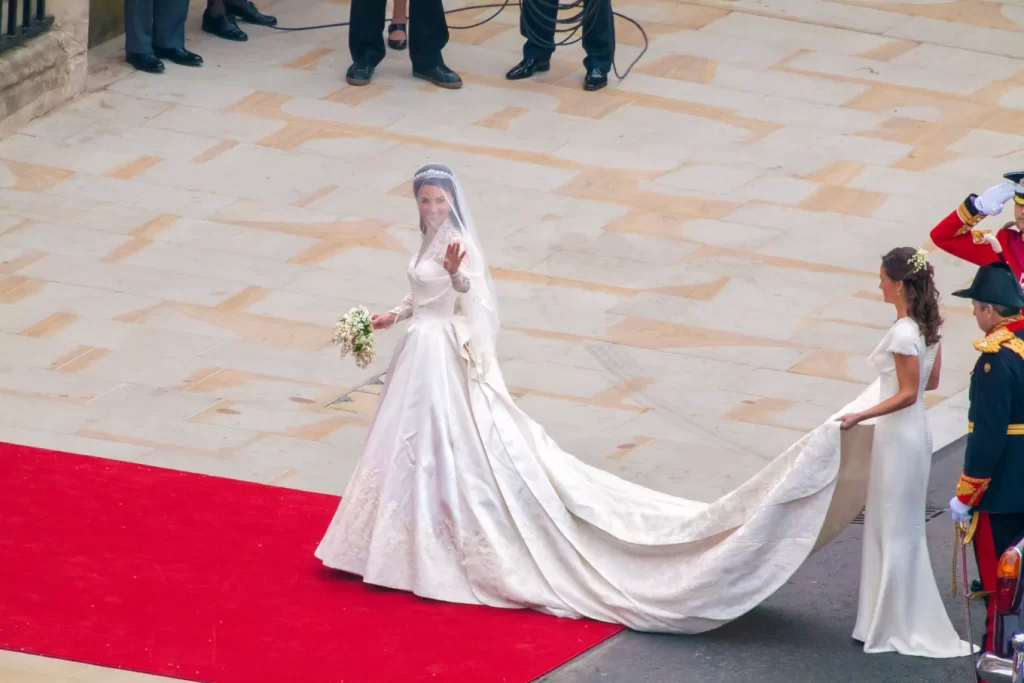
The Royal Marriages Act of 1772 requires that the first six individuals in the line of succession obtain the monarch’s consent before tying the knot.
Failure to secure this approval could result in the person, along with their descendants, being disqualified from ascending to the throne.
This law has been applied to numerous royal unions, including those of Prince Charles and Camilla Parker Bowles, Prince William and Kate Middleton, and Prince Harry and Meghan Markle.
In each case, the couples sought and received Queen Elizabeth II’s written consent before proceeding with their weddings.
The official notice of approval, known as the “Instrument of Consent,” is an ornate document featuring calligraphy, a wax seal, and custom artwork representing the couple.
5. Black should be worn only at funerals.
The royal family adheres to a strict color code when it comes to their attire, with black being reserved primarily for funerals and periods of mourning.
This tradition is rooted in respect and solemnity, as black is a color often associated with grief and sorrow. However, there have been instances where royals have deviated from this rule, causing quite a stir.
In 1981, Princess Diana made headlines when she wore a striking black taffeta dress to her first royal engagement after becoming engaged to Prince Charles.
The dress, which later became known as the “revenge dress,” was seen as a bold statement, as black was not typically worn outside of mourning periods.
According to Diana’s biographer, Prince Charles himself expressed surprise at her choice, reportedly exclaiming, “Only people in mourning wear black!”
6. They must pack a black outfit every time they travel.

In addition to the rule about wearing black at funerals, the royal family has another travel-related protocol: they must always pack a black outfit when journeying abroad.
This requirement ensures that they are prepared for any unexpected events, such as the death of a family member or a significant figure in the country they are visiting.
This tradition is believed to have originated from Queen Elizabeth II’s personal experience. In 1952, while on a trip to Kenya, the then-Princess Elizabeth received the news that her father, King George VI, had passed away.
As she did not have a black mourning outfit with her, she had to wait on the plane until one could be delivered before disembarking, out of respect for her late father and the solemnity of the situation.
Since then, all royals have been required to travel with a black ensemble to avoid similar circumstances.
7. N-de pantyhose should be worn to formal events.
The royal dress code extends beyond the color of the outfits, with specific guidelines for hosiery as well.
While there is no official rule stating that royal women must wear n-de pantyhose to formal events, it has become an unspoken expectation within the family.
This tradition was highlighted in 2018 when Meghan Markle, the Duchess of Sussex, made her first official appearance alongside Queen Elizabeth II wearing a pair of n-de pantyhose.
The choice was seen as a sign that Markle was embracing the royal dress code and adhering to the Queen’s preferences.
The Duchess of Cambridge, Kate Middleton, is also known for frequently wearing nude hosiery to formal engagements, further cementing this fashion tradition within the royal family.
8. Women must also wear hats to formal events.
Hats and fascinators have long been a staple of royal fashion, particularly for women attending formal daytime events.
This tradition dates back to the 1950s, when it was considered improper for ladies to show their hair in public.
While the custom has evolved, with hats now being reserved for more formal occasions, it remains an important part of the royal dress code.
The hats worn by royal women have become increasingly elaborate and artistic over the years, often garnering as much attention as the outfits themselves.
A prime example is the whimsical fascinator worn by Princess Beatrice at Prince William and Kate Middleton‘s wedding in 2011, which featured a unique, sculptural design that made headlines around the world.
9. Tiaras are reserved for after 6 p.m.
Just as hats are a must for formal daytime events, tiaras are the headwear of choice for royal women attending formal evening engagements.
However, there is a specific protocol that dictates when and how tiaras should be worn.
According to royal etiquette expert Diana Mather, tiaras are only to be worn at events taking place after 6 p.m.
This is because, traditionally, women would change into evening gowns and don their most precious jewels, including tiaras, for dinner and other nighttime occasions.
The one exception to this rule is for brides, who are permitted to wear a tiara on their wedding day, regardless of the time of the ceremony.
10. Royals don’t sign autographs for fans.
While it’s common for celebrities to sign autographs for their adoring fans, the same cannot be said for members of the royal family.
In fact, royals are strictly prohibited from giving out their signatures to the public, as a means to prevent forgery and unauthorized use of their names.
This rule has been in place for many years, and royals are instructed to politely decline any requests for autographs. However, there have been a few instances where the protocol has been broken.
In 2010, Prince Charles made an exception when he signed an autograph for a couple whose home had been destroyed by floods in Cornwall.
The prince wrote “Charles 2010” on a piece of paper provided by his bodyguard, demonstrating his compassion for those affected by the disaster.
11. Dark nail polish is generally frowned upon.
The royal family’s dress code extends to even the smallest details, including the color of nail polish worn by female members.
It is widely believed that the Queen prefers a subtle, neutral nail color, and as such, royal women are discouraged from wearing dark or bold shades, particularly when attending official events.
This unwritten rule has been observed by many royal women, including Kate Middleton and Meghan Markle, who are often seen sporting nude or light pink nail polish.
However, there have been instances where the rule has been broken, such as when Meghan Markle wore dark, opaque nail polish to the British Fashion Awards in 2018, causing a minor stir among royal watchers.
Princess Diana, known for her rebellious fashion choices, also frequently wore red nail polish in public, showcasing her individuality within the confines of the royal dress code.
12. Two direct heirs cannot fly in a plane together.

To ensure the continuity of the monarchy, the royal family has a strict rule that prohibits two direct heirs to the throne from traveling together on the same flight.
This protocol is designed to minimize the risk of losing multiple heirs in the event of a tragic accident.
Currently, this rule applies to King Charles and his son, Prince William, who are first and second in line to the throne, respectively.
As Prince George, William’s son, grows older, he too will be subject to this protocol.
The Cambridges have been granted special permission by the Queen to travel with their children in the past, but as George approaches the age of 12, it is expected that he will begin flying separately from his father.
13. Shellfish should never be ordered at restaurants.
When dining out, members of the royal family are advised to avoid ordering shellfish dishes.
This recommendation stems from the higher risk of food poisoning associated with shellfish compared to other foods, as it can easily spoil if not properly prepared or stored.
The royal family’s busy schedules and public appearances make it crucial for them to maintain good health, and falling ill due to food poisoning could disrupt their duties.
While this rule is not strictly enforced, it is a guideline that many royals choose to follow.
However, some members, such as King Charles, have been known to occasionally indulge in a shellfish dish, demonstrating that even royals can make exceptions to the rule.
14. They must keep a record of every gift they receive.
As public figures, the royal family receives countless gifts from dignitaries, organizations, and members of the public.
To ensure transparency and accountability, the Royal Household has a comprehensive gift policy that requires all presents to be logged and tracked.
According to the policy, official gifts should be acknowledged, recorded, and traceable at all times.
This meticulous record-keeping allows the public to view the gifts received by the royal family each year, with the list often including an array of unusual items.
Some of the most bizarre gifts have included an automatic rifle, boxes of mangoes, a PhD thesis, and even live sloths from Brazil.
The careful documentation of these presents demonstrates the royal family’s commitment to maintaining public trust and adhering to strict protocols surrounding gifts.
15. When the monarch stops eating, everyone stops eating.
Dining with the royal family is a highly choreographed affair, with numerous rules and customs that guests must follow.
One of the most important protocols revolves around the monarch’s eating habits, which dictate the flow of the meal for everyone in attendance.
According to royal etiquette, when the monarch, currently King Charles, stops eating, all other diners must also cease eating, regardless of whether they have finished their meal.
This rule is a sign of respect for the monarch and ensures that the dinner party progresses at a pace set by the head of the royal family. Guests are expected to pay close attention to the monarch’s actions throughout the meal, taking cues on when to start and stop each course.
16. No sleeping while the Queen/King is awake.
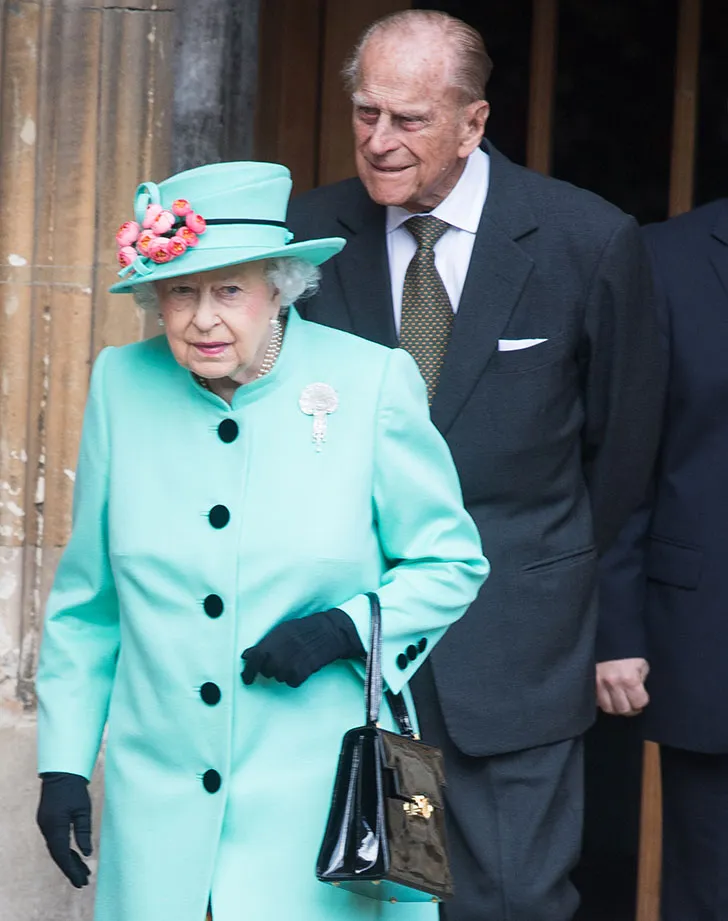
During her reign, Queen Elizabeth II was known for her tireless work ethic and dedication to her duties.
As a result, members of the royal family and household staff were expected to follow her lead, even when it came to their sleeping habits.
According to a former private secretary to the Queen, Sir William Heseltine, it was considered “bad form” to retire to bed before the monarch.
This meant that guests and family members were often required to stay up late, engaging in conversation and activities until the Queen decided to call it a night.
Princess Diana reportedly found this custom particularly challenging, as she often wished to retire earlier than the Queen.
The protocol, while somewhat unusual, demonstrated the immense respect and deference shown to the monarch within the royal household.
17. The Queen can drive without a license.
One of the more peculiar privileges enjoyed by the British monarch is the ability to drive without a driver’s license.
As the sovereign, the Queen was exempt from the legal requirement to hold a valid license or to display license plates on her vehicles.
This unique privilege extended beyond just the formality of obtaining a license. In fact, Queen Elizabeth II never had to take a driving test, despite being an avid driver.
During World War II, the then-Princess Elizabeth trained as a military driver and mechanic, developing a lifelong love for driving.
She was often seen behind the wheel of her beloved Range Rover on the royal estates, demonstrating her skills and independence well into her later years.
18. PDA is strongly discouraged.
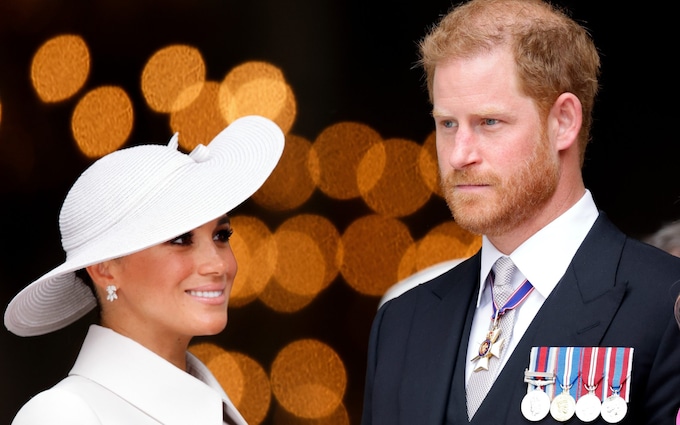
Public displays of affection (PDA) are generally frowned upon within the royal family, particularly when members are attending official engagements or representing the monarchy abroad.
This protocol is rooted in the idea that royals should maintain a professional and dignified image while in the public eye.
The precedent for this protocol was set by Queen Elizabeth II and Prince Philip, who rarely engaged in PDA throughout their long marriage.
This tradition has been carried on by younger generations, with Prince William and Kate Middleton often maintaining a more formal and reserved demeanor when attending public events together.
However, some royal couples, such as Prince Harry and Meghan Markle, have been known to break with this protocol, occasionally sharing affectionate moments in public and challenging the traditional norms of royal behavior.
19. Royals enter the room in a specific order.
At official events and engagements, members of the royal family are expected to enter the room in a specific order, dictated by their position in the line of succession.
This protocol ensures that the hierarchy within the family is clearly displayed and respected.
Typically, the order of entrance begins with the monarch, followed by the heir apparent and their spouse, and then continues down the line of succession.
For example, at an event attended by the full royal family, the order of entrance would be: King Charles, Prince William and Kate, and so on. This protocol extends to seating arrangements as well, with the most senior royals being seated closest to the monarch.
20. Wedding bouquets must contain myrtle.
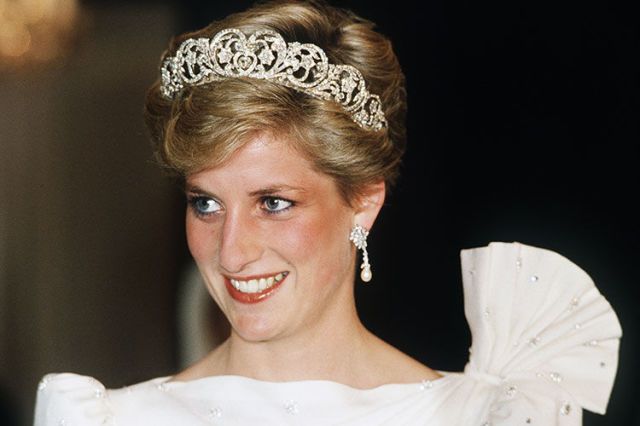
The wedding bouquets carried by royal brides are steeped in tradition, with one particular element being a constant presence for generations: myrtle.
This evergreen plant, which symbolizes love, marriage, and lasting commitment, has been a staple in royal wedding bouquets since the marriage of Queen Victoria’s eldest daughter, also named Victoria, in 1858.
Since then, every royal bride has included a sprig of myrtle in their bouquet, often sourced from a bush planted by Queen Victoria herself at Osborne House on the Isle of Wight.
The tradition has been upheld by modern royal brides, such as Kate Middleton and Meghan Markle, who both featured myrtle in their stunning bridal bouquets.
This small but significant detail serves as a touching nod to the long history of royal weddings and the enduring symbolism of love and unity.
21. Handshakes should consist of two to three pumps.
When it comes to greeting members of the public, the royal family has a specific protocol for handshakes to ensure consistency and professionalism.
According to Grant Harrold, a former butler to Prince Charles and Camilla, a proper royal handshake should consist of two to three pumps, with the palms kept open and the thumbs pointed downward.
This handshake technique is taught to royal family members from a young age, allowing them to perfect the art of the greeting as they grow into their public roles.
It is important to note that, while there are guidelines for how a royal should shake hands, it is generally expected that members of the public will wait for the royal to initiate the greeting, rather than extending their hand first.
This protocol helps to maintain a sense of formality and respect in interactions between the royal family and the public.
22. Boys wear shorts until age 8.
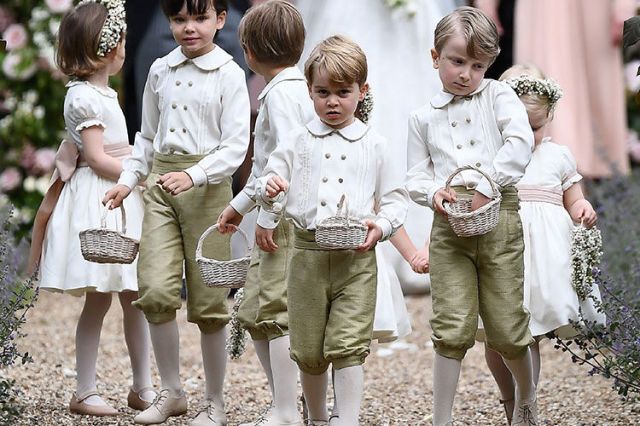
One of the more endearing fashion traditions within the royal family is the custom of dressing young boys in shorts, rather than long trousers, until they reach the age of eight.
This practice dates back to the 16th century, when it was common for boys from aristocratic families to wear gowns and later, shorts, as a symbol of their youth and status.
This tradition has been consistently observed by the modern royal family, with Princes William and Harry both wearing shorts throughout their early childhood years.
More recently, Prince George, the son of William and Kate, has been seen almost exclusively in tailored shorts at public events, showcasing the enduring nature of this sartorial custom.
While it may seem old-fashioned to some, the tradition of dressing young royal boys in shorts serves as a charming reminder of the family’s long-standing commitment to upholding historical practices.
23. Avoid words like “toilet” and “perfume.”
The royal family is known for their impeccable manners and refined language, which extends to the avoidance of certain words deemed too common or vulgar for royal use.
Two such words that are particularly discouraged are “toilet” and “perfume.”
Instead of referring to the bathroom as a “toilet,” members of the royal family are expected to use terms such as “lavatory” or “loo,” which are considered more polite and appropriate.
Similarly, the word “perfume” is often replaced with the more refined term “scent” when discussing fragrances worn by the royals.
This attention to language is not limited to just these two words, but extends to a whole host of terms that are considered too casual or improper for royal use.
For example, royals are discouraged from using the word “lounge” to refer to a living room, instead opting for the more formal term “drawing room” or “sitting room.”
They also avoid using the term “patio” to describe an outdoor seating area, preferring the word “terrace” instead.
These language choices may seem small and insignificant to outsiders, but they are an important part of the royal family’s commitment to maintaining a sense of decorum and sophistication in all aspects of their lives.
24. They all have to get baptized.
As the head of the Church of England, the British monarch holds a significant role in the religious life of the nation.
To maintain this strong connection between the royal family and the church, all members of the royal family are required to be baptized into the Anglican faith.
The baptism ceremony typically takes place shortly after the birth of a new royal baby, serving as a formal introduction of the child into the church community.
The event is usually a private affair, attended by close family members and godparents, and is performed by a high-ranking member of the clergy, such as the Archbishop of Canterbury.
The infant is baptized with holy water from the River Jordan, a nod to the biblical story of Jesus’ baptism, and is anointed with holy oil as a symbol of their spiritual journey within the church.
25. Follow proper etiquette after a conversation.
Engaging in conversation with a member of the royal family is an experience governed by a set of unspoken rules and expectations.
One of the most important aspects of royal etiquette is how one should behave after a conversation has concluded.
When a conversation with a royal comes to an end, it is crucial to remember that the royal should always be the one to initiate the conclusion.
This means that guests should never turn their back on a royal or walk away until the royal has given a clear signal that the conversation is over.
In most cases, this signal is a subtle nod or a verbal cue, such as “it was a pleasure speaking with you.”
Once the royal has indicated that the conversation has ended, guests should respond with a slight bow or curtsy before stepping away gracefully.
26. No one can “turn their back” on the Queen/King.
Showing respect to the monarch is a fundamental aspect of royal protocol, and one of the most significant ways to demonstrate this respect is by never turning one’s back on the Queen/King.
This rule applies to all members of the public, as well as to members of the royal family themselves.
The origins of this tradition are rooted in the idea that turning one’s back on the sovereign is a sign of disrespect or even a potential threat.
In modern times, the rule serves as a reminder of the King’s status and the reverence with which he is regarded.
When in the presence of the monarch, individuals are expected to maintain a respectful posture, facing him at all times until he has passed by or the encounter has concluded.
This protocol extends to all interactions with the monarch, whether in a formal setting or a more casual encounter.
27. No selfies.
In the age of smartphones and social media, taking selfies with celebrities and public figures has become a common practice.
However, when it comes to the British royal family, selfies are strictly off-limits.
This rule is in place to maintain a sense of formality and decorum in interactions between the royals and the public.
Instead of engaging in the casual, self-directed nature of a selfie, members of the public are encouraged to have a more traditional, respectful encounter with the royals.
This may involve a brief conversation, a handshake, or a photograph taken by an official photographer.
By discouraging selfies, the royal family aims to preserve the dignity and mystique that surrounds their public image, while still allowing for meaningful interactions with the people they serve.
28. No inheritance tax for the U.K.’s monarch.
One of the unique financial privileges enjoyed by the British monarch is an exemption from the country’s inheritance tax.
This means that, unlike other citizens who must pay a substantial tax on the assets they inherit, the monarch can pass down their wealth to their successors without incurring this significant financial burden.
The exemption is rooted in the idea that the monarch’s assets, including properties, artworks, and investments, are not their personal property but rather belong to the Crown and the nation as a whole.
This arrangement ensures that the wealth of the monarchy is preserved and can continue to support the work and responsibilities of the sovereign over generations.
While this exemption has faced criticism from some quarters as an unfair advantage, it remains a long-standing tradition that sets the financial position of the monarch apart from that of ordinary citizens.
29. The Queen’s dogs are always prepared gourmet meals and are never reprimanded.
The Queen is known for her love of animals, particularly her corgis, which have been a constant presence in her life for many decades.
These beloved pets are not just companions, however, but also enjoy a level of pampering and privilege that is fit for a royal.
The Queen’s corgis are fed a special diet of gourmet meals that are prepared daily by the royal chefs.
These meals typically include fresh meats, vegetables, and rice and are designed to keep the dogs healthy and happy.
The corgis are also given regular exercise and plenty of attention from the Queen and her staff, who are devoted to their care and well-being.
Perhaps most surprisingly, the Queen’s corgis are never reprimanded or disciplined, even if they misbehave or cause mischief.
This is said to be a reflection of the Queen’s gentle and indulgent nature and her deep bond with her pets.
30. Women must wear dresses and skirts.
The dress code for female members of the royal family is steeped in tradition, with a strong emphasis on maintaining a formal and elegant appearance.
One of the key aspects of this dress code is the expectation that women should wear dresses or skirts, rather than trousers or more casual attire.
This rule is believed to have been influenced by the personal preferences of Queen Elizabeth II, who was rarely seen wearing trousers in public throughout her reign.
The Queen’s adherence to traditional feminine dress served as a model for other royal women, who have generally followed suit in their fashion choices.
While there have been occasions where royal women have worn trousers or more modern styles, the prevailing expectation remains that dresses and skirts are the most appropriate choices for official engagements and public appearances.
31. Meghan Markle broke fashion protocol by wearing pants.
When Meghan Markle joined the royal family as the Duchess of Sussex, she brought a fresh, modern perspective to royal fashion.
One of the ways in which she challenged traditional expectations was by occasionally wearing trousers to official events, a choice that deviated from the usual dress code for royal women.
Markle’s decision to wear trousers, particularly during her time as a working royal, was seen by many as a bold statement of her individuality and a departure from the more conservative style typically associated with the monarchy.
While her fashion choices were sometimes met with criticism from traditionalists, they also garnered praise from those who saw them as a sign of the royal family adapting to changing times and attitudes.
Markle’s willingness to break with protocol and embrace her own personal style served as an inspiration to many women who admired her confidence and modern approach to royal life.
2HJPKTB Prince Harry and Meghan Markle, Duchess of Sussex, ask Spotify to make changes to the platform to combat disinformation about COVID-19, a week after Spotify announced actions to regain the investment of the multi-year podcast partnership Spotify made with the pair. Prince Harry and Meghan have only done one podcast so far. (Photo by DPPA/Sipa USA)
32. Royal women hold handbags on their left arm.
Handbags are an essential accessory for royal women, serving both practical and symbolic purposes. One of the most notable aspects of how royal women carry their handbags is the practice of holding them on their left arm.
This custom is not merely a matter of personal preference but rather a deliberate choice that allows royal women to keep their right hand free for greeting people, shaking hands, and engaging in other social interactions.
By holding their handbag on the left arm, royal women can smoothly transition between carrying the accessory and participating in the various rituals and courtesies that are expected of them in public.
This subtle but significant detail of royal etiquette demonstrates the level of thought and consideration that goes into every aspect of a royal woman’s public appearance.
33. When the Queen places her purse on a table, dinner is officially over.
In addition to using her purse to signal the end of a conversation, the Queen also uses it to communicate other important messages to her staff and guests.
One of the most significant of these messages involves the placement of her purse on a table during a formal dinner or banquet.
When the Queen places her purse on the table, it is a clear sign that the meal is over and that it is time for the guests to leave.
This signal is closely watched by the Queen’s staff, who will then begin the process of clearing the tables and escorting the guests out of the dining room.
The placement of the purse on the table is seen as a polite but firm way for the Queen to indicate that the evening has come to an end and that it is time for everyone to retire for the night.
This tradition is just one of the many ways in which the Queen uses her purse to communicate her wishes and manage the complex social rituals of royal life.
34. Eating garlic is a “no-no.”
When it comes to dining, members of the royal family are expected to adhere to certain culinary guidelines that reflect their status and the formality of their public roles.
One of the most well-known of these guidelines is the restriction on eating garlic.
The avoidance of garlic in royal cuisine is believed to stem from a desire to maintain pleasant breath and avoid any potential social awkwardness during interactions with others.
As representatives of the monarchy, royal family members are expected to maintain a high standard of personal hygiene and to avoid any habits or behaviors that could be seen as unrefined or off-putting.
By eschewing garlic in their diets, the royals aim to ensure that they always present themselves in the best possible light, both in terms of their appearance and their social graces.
35. Kate Middleton caused a stir by wearing dark opaque nail polish.
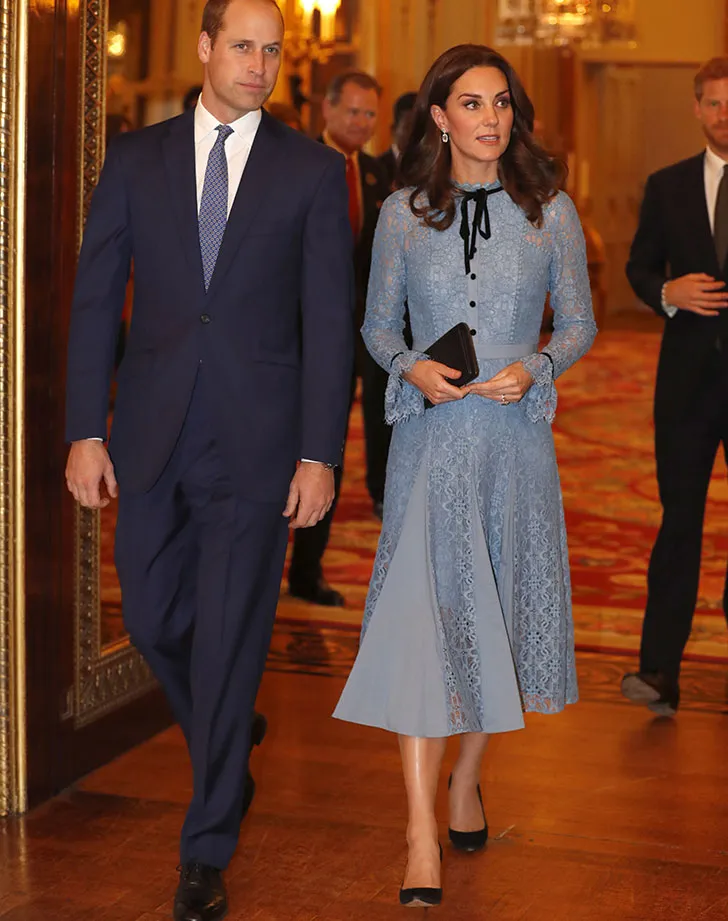
As a member of the royal family, Kate Middleton is expected to adhere to certain fashion and grooming standards that reflect the formality and tradition of her role. One area where these standards are particularly strict is in the choice of nail polish colors.
In 2018, Middleton made headlines when she appeared at the British Fashion Awards wearing dark, opaque nail polish – a departure from the usual neutral and pale shades typically worn by royal women.
The bold color choice was seen by many as a daring break from protocol, and it sparked widespread discussion about the evolving fashion norms within the royal family.
While some traditionalists criticized Middleton for straying from the established guidelines, others praised her for bringing a fresh, modern touch to royal style.
The incident served as a reminder of the intense scrutiny that royal women face in every aspect of their public appearance, and the delicate balance they must strike between tradition and individual expression.
36. The Queen signaled when a conversation was over using her purse.
Queen Elizabeth II was known for her impeccable social graces and her ability to navigate even the most complex social situations with ease.
One of the subtle ways in which she managed her interactions with others was through the use of her ever-present handbag.
The Queen’s handbag served not only as a practical accessory but also as a discreet tool for communication.
When she wished to signal that a conversation had come to an end, she would simply move her handbag from one arm to the other.
This subtle gesture was understood by her staff and those around her as a cue that it was time to politely wrap up the exchange and move on.
The use of the handbag as a signaling device allowed the Queen to maintain control over her social interactions without causing offense or disrupting the flow of conversation.
It was a testament to her skill as a communicator and her deep understanding of the nuances of social etiquette.
37. Prince William broke protocol for selfies on a few occasions.
While the royal family is generally expected to adhere to strict protocols surrounding their interactions with the public, there have been occasions when individual members have chosen to break with tradition in the name of connecting with their subjects. One notable example of this is Prince William’s willingness to pose for selfies with members of the public.
On several occasions, the Prince has been known to step away from the formality of royal engagements to take selfies with fans and well-wishers.
This departure from the usual “no selfie” rule has been seen by many as a sign of William’s down-to-earth nature and his desire to build a more personal rapport with the people he meets.
While some traditionalists have criticized the Prince for breaking with protocol, others have praised him for his willingness to adapt to changing social norms and to engage with the public in a more relaxed and informal way.
William’s selfie-taking moments have become a popular talking point and have helped to humanize the royal family in the eyes of many people around the world.
38. Pasta, potatoes, and rice never appear on the dinner menu.
The royal family’s dining habits have long been a subject of fascination for the public, with many people curious about what foods grace the tables at Buckingham Palace and other royal residences.
One surprising revelation about the royal diet is that certain staple foods, such as pasta, potatoes, and rice, are rarely, if ever, served at royal dinners.
This culinary quirk is said to be a reflection of the Queen’s personal tastes and preferences.
According to former royal chef Darren McGrady, the Queen was not a fan of carbohydrate-heavy foods and preferred to eat meals that were focused on protein and vegetables.
As a result, the royal kitchen tended to avoid dishes that featured pasta, potatoes, or rice as a main component.
This dietary preference was not only a matter of personal taste but also a reflection of the Queen’s commitment to maintaining a healthy and balanced lifestyle, even in the face of the rich and indulgent cuisine that is often associated with royal dining.
39. The Queen’s breakfast menu is the same every single day.
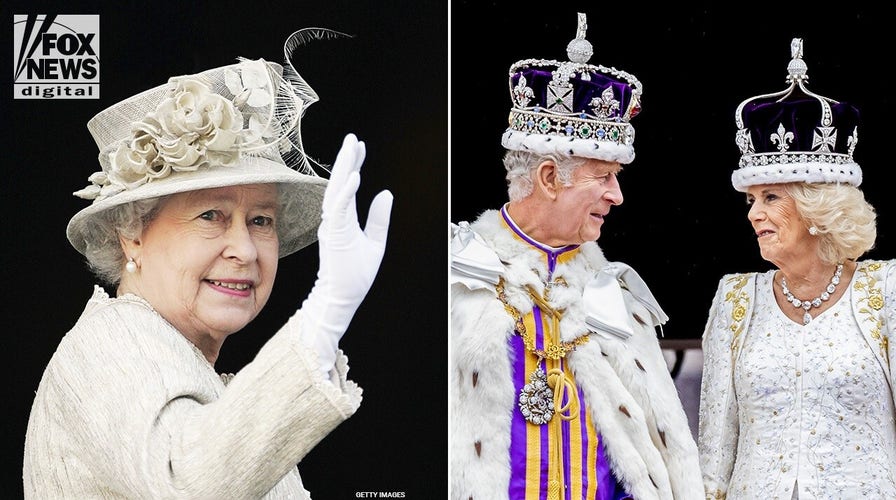
While the royal family’s dinner menus may be subject to the Queen’s personal preferences and the whims of the royal chefs, the Queen’s breakfast menu was a model of consistency and simplicity.
According to royal sources, the Queen enjoyed the same breakfast every single day throughout her reign.
The Queen’s morning meal typically consisted of a cup of Earl Grey tea (without milk or sugar) and a few biscuits.
On occasion, she might also have a bowl of Special K cereal or a piece of toast with marmalade.
This simple and unchanging breakfast routine was a reflection of the Queen’s disciplined and structured approach to life, as well as her preference for familiar and comforting foods.
The consistency of her breakfast menu also served as a testament to her remarkable stamina and her ability to maintain a strong sense of purpose and routine, even in the face of the many demands and challenges of her role as monarch.
40. Napkins must be folded in half after use.
Dining etiquette is an important aspect of royal life, and even the smallest details of table manners are subject to strict rules and traditions. One of these rules concerns the proper use and folding of napkins during formal meals.
According to royal protocol, napkins must be folded in half after use, with the crease facing toward the diner.
This simple act of folding serves several purposes. First, it helps to keep the napkin clean and presentable, even after it has been used to dab the mouth or hands during the meal.
Second, it serves as a subtle signal to the serving staff that the diner has finished their meal and that the napkin can be cleared away.
Finally, the act of folding the napkin is seen as a sign of respect and appreciation for the dining experience, demonstrating that the diner has taken care to observe the proper etiquette and to leave the table in a tidy and orderly state.
41. There’s only one right way to sip on tea.
Tea is an integral part of British culture, and the royal family is no exception to this national obsession. However, even the simple act of sipping tea is subject to a strict set of rules and protocols when it comes to royal etiquette.
According to tradition, the proper way to sip tea is to hold the cup by pinching the handle between the thumb and forefingers, with the middle finger supporting the base of the handle.
This grip allows the drinker to maintain control over the cup while also keeping a respectful distance from the hot liquid inside.
When sipping, the drinker should not extend their pinky finger, as this is considered a common misconception and is actually seen as improper etiquette. Instead, they should take small, delicate sips from the same spot on the cup’s rim, to avoid leaving multiple lipstick marks or smudges.
These rules may seem fussy or arbitrary to outsiders, but they are an important part of the royal family’s commitment to maintaining a sense of decorum and refinement in all aspects of their lives.
42. There’s a process to excuse yourself to the toilet.
Even the most basic of bodily functions are subject to a set of rules and protocols when it comes to royal etiquette. When a member of the royal family needs to excuse themselves to use the restroom during a formal occasion, they must follow a specific set of steps to do so discreetly and respectfully.
According to royal protocol, the first step is to simply say “excuse me” to the other guests at the table, without providing any further explanation or details.
The royal then folds their napkin and places it to the left of their plate before standing up and leaving the room. If they are not finished with their meal, they should also cross their utensils on their plate to signal to the serving staff that they are not yet done.
Upon returning to the table, the royal should simply sit down and continue with the meal as if nothing had happened.
These rules are designed to allow royals to take care of their personal needs without causing undue disruption or embarrassment to themselves or their fellow diners.
43. Chin placement is key.
Posture and body language are important aspects of royal etiquette, and even the placement of one’s chin can be subject to scrutiny and interpretation.
According to royal protocol, the proper way to hold one’s chin is to keep it parallel to the ground, with the head held high and the neck elongated.
This chin placement is considered a sign of confidence, poise, and elegance, and is often seen in official portraits and photographs of members of the royal family.
By keeping their chin level and their head held high, royals are able to project an air of authority and grace, even in the face of pressure or scrutiny.
This posture also allows them to maintain good eye contact with others, which is seen as a sign of respect and engagement in social situations.
While it may seem like a small detail, the placement of one’s chin is just one of the many ways in which the royal family communicates their status and their adherence to the traditions and protocols of their role.
44. Some words are off-limits.
As representatives of the British monarchy, members of the royal family are expected to maintain a certain level of decorum and formality in their speech and communication.
This means that certain words and phrases that might be considered common or acceptable in everyday conversation are strictly off-limits in royal circles.
For example, royals are discouraged from using slang terms or colloquialisms, as these are seen as too informal or casual for their position.
Similarly, they are expected to avoid using words that might be considered vulgar, offensive, or politically charged, as these could reflect poorly on the monarchy as an institution.
Instead, royals are encouraged to use clear, concise, and dignified language that reflects their status and their role as public figures.
This can sometimes result in a certain level of stiffness or formality in their speech, but it is seen as a necessary part of maintaining the dignity and authority of the monarchy.
45. Royal children have no last names until now.
The issue of last names has been a somewhat complicated one for members of the royal family, particularly when it comes to the naming of royal children.
Historically, royal children have not been given traditional last names, but have instead been known by their first names and the name of the royal house to which they belong.
However, in recent years, there has been a shift towards giving royal children more conventional last names, particularly when they attend school or interact with the wider world.
For example, when Prince William and Kate Middleton’s children, Prince George and Princess Charlotte, started school, they were enrolled under the last name “Cambridge,” reflecting their parents’ titles as the Duke and Duchess of Cambridge.
Similarly, when Prince Harry and Meghan Markle’s son, Archie, was born, he was given the last name “Mountbatten-Windsor,” which is the personal surname used by some members of the royal family.
These changes reflect a growing recognition of the need for royal children to have more conventional identities, particularly as they navigate the modern world and interact with people outside of the royal bubble.
46. Leave the wedges at home.
When it comes to fashion, the royal family is known for their classic and conservative style, with a strong emphasis on tradition and formality.
One particular item of footwear that has long been considered a faux pas in royal circles is the wedge heel.
According to royal protocol, wedges are seen as too casual and informal for most royal occasions, and are generally discouraged in favor of more traditional and elegant footwear options such as pumps or stilettos.
This rule is said to be a particular pet peeve of the Queen, who has been known to disapprove of wedges and to prefer that the women in her family stick to more classic shoe styles.
While there have been a few notable exceptions to this rule over the years, such as Kate Middleton’s occasional use of wedges during more casual engagements, the general consensus among the royals is that wedges are best left at home when it comes to official appearances and events.
47. Royal wedding parties must include a crop of children.
Royal weddings are known for their pomp and ceremony, with every detail carefully planned and executed to ensure a flawless and memorable occasion.
One tradition that has long been a part of royal weddings is the inclusion of a group of young children in the wedding party, often serving as bridesmaids or pageboys.
This tradition is said to date back to the Victorian era, when it was common for wealthy and aristocratic families to include a large number of children in their wedding parties as a symbol of their social status and prosperity.
In the modern era, the inclusion of children in royal weddings is seen as a way to add a touch of whimsy and innocence to the proceedings, as well as to create opportunities for adorable photos and memorable moments.
For example, at the wedding of Prince William and Kate Middleton in 2011, the couple included a group of young bridesmaids and pageboys in their wedding party, including the groom’s niece and nephew, Princess Charlotte and Prince George.
48. The family can’t eat shellfish.
When it comes to dining, the royal family is known for their adventurous tastes and their willingness to try new and exotic foods from around the world. However, there is one type of food that is strictly off-limits for the royals: shellfish.
The reason for this prohibition is said to be a matter of safety and security.
Shellfish, such as oysters, clams, and mussels, are known to carry a higher risk of food poisoning than other types of seafood, due to their tendency to absorb bacteria and toxins from the water in which they live.
For the royal family, who are often traveling and dining in unfamiliar locations, the risk of contracting a foodborne illness from shellfish is simply too high to justify.
As a result, the royals are instructed to avoid shellfish altogether, and to stick to safer and more reliable sources of protein such as meat, poultry, and fish.
49. The Queen insists on spending a week preparing for Christmas.
Christmas is a major holiday for the royal family, and one that is steeped in tradition and ceremony. For the Queen, the preparation for Christmas begins well in advance, with a full week dedicated to getting everything ready for the big day.
During this week, the Queen oversees the decoration of the royal residences, including the placement of the Christmas trees and the hanging of the garlands and wreaths.
She also personally selects the gifts that will be given to each member of the family, as well as to the many staff and employees who work for the royal household.
The Queen is said to be a meticulous and thoughtful gift-giver, and takes great care in choosing presents that are both meaningful and appropriate for each recipient.
In addition to the gift-giving, the Queen also oversees the planning of the Christmas Day menu, which typically includes traditional dishes such as roast turkey, Brussels sprouts, and Christmas pudding.
50. The family doesn’t open presents on Christmas Day; they do it on Christmas Eve.
While most families in the United Kingdom and around the world celebrate Christmas by opening presents on Christmas Day, the royal family does things a bit differently.
For the royals, the gift-giving takes place on Christmas Eve, in a tradition that is said to have been started by Queen Victoria and Prince Albert.
On Christmas Eve, the royal family gathers together in the Red Drawing Room at Sandringham House, the Queen’s private estate in Norfolk.
There, they exchange gifts and enjoy a festive afternoon tea, complete with sandwiches, cakes, and pastries.
The gifts are typically laid out on trestle tables, and each member of the family takes turns selecting and opening their presents.
The gifts are usually modest in nature, with a focus on thoughtfulness and humor rather than extravagance. After the gift-giving, the family attends a church service on Christmas Day, followed by a traditional Christmas lunch and a walk on the Sandringham estate.
51. Natural makeup is preferred.
When it comes to beauty and grooming, the royal family is known for their classic and understated style. This is particularly true when it comes to makeup, which is expected to be natural and subtle, rather than bold or dramatic.
For the women of the royal family, this means a focus on clean, fresh-faced looks that enhance their natural beauty without looking overly made-up.
Foundation and concealer are used sparingly, with a focus on creating an even, glowing complexion.
Eye makeup is typically limited to a soft, neutral shadow and a coat of mascara, while lip colors are usually in shades of pink or nud.
The overall effect is one of effortless elegance and sophistication, rather than flashy or attention-seeking.
This preference for natural makeup is said to reflect the royal family’s commitment to tradition and modesty and is seen as an important part of maintaining a dignified and respectable public image.
52. Cleavage isn’t a part of the royal dress code.
When it comes to fashion, the royal family is known for their conservative and traditional style, with a strong emphasis on modesty and decorum.
One aspect of this style that is particularly notable is the avoidance of cleavage in royal attire.
For the women of the royal family, dresses and tops that reveal cleavage are generally considered inappropriate and are avoided in favor of more modest and covered-up styles.
This rule is said to reflect the royal family’s commitment to maintaining a dignified and respectable public image, and to avoid any clothing that could be seen as sexually suggestive or provocative.
The avoidance of cleavage is also a practical consideration, as the royals are often photographed from all angles and must be careful to avoid any wardrobe malfunctions or embarrassing moments.
As a result, the women of the royal family typically opt for high necklines, layered looks, and carefully tailored clothing that flatters their figures without revealing too much.
53. Utensil placement is very important.
Table manners and dining etiquette are an important part of royal protocol, and the placement of utensils is a key aspect of this.
For the royals, the proper placement of forks, knives, and spoons is not just a matter of aesthetics, but also a way to communicate important messages to the staff and other diners.
One of the most important rules of utensil placement involves the position of the knife and fork when a diner has finished their meal.
If a royal family member is finished eating and ready for their plate to be cleared, they will place their knife and fork together at the 11 o’clock position on the plate, with the tines of the fork facing up.
This signal tells the staff that the diner is finished and that their plate can be removed. If, on the other hand, the diner is not finished and plans to continue eating, they will place their utensils on either side of the plate, with the knife on the right and the fork on the left.
This signal tells the staff to leave the plate in place and to wait for further instructions from the diner.
54. Dining etiquette requires precise utensil placement.
In addition to the rules around the placement of utensils when a diner has finished their meal, there are also specific guidelines for how utensils should be used throughout the dining experience.
For example, when eating soup, the spoon should be used to scoop the soup away from the diner, rather than towards them.
This is said to be a more polite and refined way of eating and helps to avoid any unsightly drips or spills. Similarly, when eating meat, the fork should be used to steady the meat while the knife is used to cut it into bite-sized pieces.
The knife and fork should then be used together to bring the food to the mouth, rather than using the fork alone. These rules are designed to create a sense of elegance and sophistication at the table and to show respect for the food and the occasion.
When it comes to bread, the royal family has a particular way of consuming it that is steeped in tradition.
Rather than biting directly into a roll or slice of bread, the royals are expected to break off small pieces and butter them individually before consuming them.
This is said to be a more polite and refined way of eating bread and helps to avoid any unsightly crumbs or messes.
Overall, the royal family’s dining etiquette is a reflection of their commitment to tradition, refinement, and respect.
By following these precise rules and guidelines, the royals are able to maintain a sense of decorum and elegance at the table, while also showing appreciation for the food and the occasion.
These traditions may seem old-fashioned or even silly to some, but for the royals, they are an important part of their cultural heritage and a way to honor the long history of the monarchy.
In conclusion, the British royal family is known for their adherence to a strict set of rules and protocols that govern every aspect of their lives.
From the way they hold their tea cups to the placement of their utensils at the dinner table, these traditions are an important part of the royal family’s identity and a reflection of their commitment to maintaining a sense of decorum and respect.
While some of these rules may seem archaic or even ridiculous to outsiders, they serve an important purpose for the royals, who see them as a way to honor their history and cultural heritage.
By following these guidelines, the royals are able to project an image of refinement, elegance, and sophistication that is essential to their public persona.
At the same time, it is clear that the royal family is not immune to change and evolution.
As the world around them has shifted and modernized, the royals have had to adapt and find ways to balance their traditional values with the demands of contemporary society.
This has led to some modifications and exceptions to the rules over time, as well as a growing recognition of the need for greater transparency and accessibility in the monarchy.
Despite these changes, however, the core values and traditions of the royal family remain largely intact.
From their commitment to public service and philanthropy to their adherence to strict codes of behavior and etiquette, the royals continue to embody a unique and fascinating aspect of British culture and history.
As we have seen throughout this article, the rules and protocols that govern the lives of the royal family are complex, intricate, and often surprising.
From the way they dress and speak to the way they eat and interact with others, every aspect of their lives is carefully regulated and choreographed to create a sense of order, stability, and continuity.
While some may view these rules as outdated or even oppressive, it is important to remember that they serve a larger purpose for the monarchy and the nation as a whole.
By upholding these traditions and values, the royals are able to provide a sense of unity and identity for the British people, and to serve as a symbol of the country’s rich history and cultural heritage.
As we move forward into an uncertain future, it will be fascinating to see how the royal family continues to evolve and adapt to the changing world around them.
Whether they are able to maintain their traditional values and protocols in the face of new challenges and demands remains to be seen, but one thing is certain: the British royal family will continue to be a source of fascination, admiration, and sometimes even controversy for generations to come.


Comments